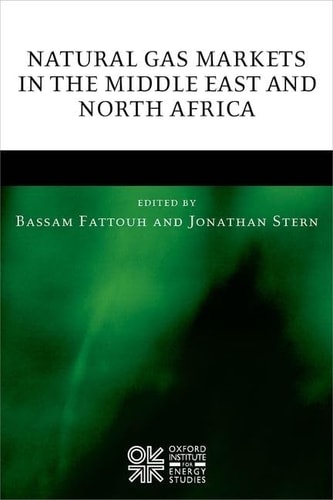
Natural Gas Markets in the Middle East and North Africa
0
0
As an Amazon Associate and affiliate partner, Menrva Books earns from qualifying purchases. Learn more
Author Description
The Middle East and North Africa (MENA) as a region accounts for around 40% of the world's proven gas reserves, yet only 10% of global supplies of gas are covered by MENA gas production. The potential for future expansion of the gas market in the both on the supply and demand side is significant since gas in many MENA states has become a cheap source of fuel for domestic industrialisation, a source of revenue for transit states, and a highly valued export commodity to multiple destinations in Asia and Europe. 50% of the world's liquefaction facilities under construction or planned for expansion will take place in MENA, which is likely to consolidate the region's role in the LNG market, allowing MENA producers to play the role of swing producers taking advantage of their location to supply both Atlantic and Pacific markets.This book, the first of its kind, will provide an in-depth study of the MENA states' individual gas markets, addressing the following questions: What are the policies of MENA governments regarding the development of their gas reserves? What are the main drivers of these policies? Will developments in the gas sector affect the ability of MENA governments to achieve the ultimate goal of economic diversification through developing energy intensive industries? Is the policy of promoting energy intensive industries viable in the long term? What role do foreign companies play in the development of domestic gas markets, export pipelines, and LNG export projects? Can current levels of domestic gas prices be maintained in an environment of rapid increases in gas demand and rising development costs?
Menrva's Summary
THE THESIS
This book investigates the complex interplay between vast natural gas reserves and the economic development strategies of nations within the Middle East and North Africa (MENA) region. Authors Bassam Fattouh and Jonathan Stern, both established experts in energy economics, utilize a combination of regional market data, policy analysis, and industrial trend forecasting to evaluate the viability of current gas-dependent economic models. The text provides a rigorous framework for understanding how these states balance domestic industrialization needs against the pressures of global export markets and rising development costs.
THE SCOPE MAP
What You Will Find
- Detailed analysis of individual gas market policies across various MENA states.
- Evaluation of the role of foreign investment in domestic infrastructure and LNG export projects.
- Assessment of the long-term viability of energy-intensive industrialization strategies.
- Examination of the economic impact of gas as both a domestic fuel source and a global export commodity.
THE AUTHORITY PERSPECTIVE
Experts recognize this work as a foundational text for understanding the specific geopolitical and economic dynamics of the MENA energy sector. Readers frequently note the technical density of the prose, which provides a comprehensive resource for policymakers and energy analysts alike.
Page Count:
350
Publication Date:
2011-05-08
Publisher:
Oxford Institute for Energy Studies
ISBN-10:
0199593019
ISBN-13:
9780199593019
Economics
Energy
Middle East
Gas Reservoirs
International relations
Natural Resources
Community Tags
Similar Books