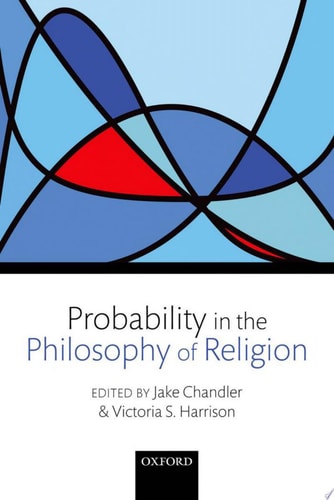
Probability in the Philosophy of Religion
Author Description
Probability theory promises to deliver an exact and unified foundation for inquiry in epistemology and philosophy of science. But philosophy of religion is also fertile ground for the application of probabilistic thinking. This volume presents original contributions from twelve contemporary researchers, both established and emerging, to offer a representative sample of the work currently being carried out in this potentially rich field of inquiry. Grouped into five parts, the chapters span a broad range of traditional issues in religious epistemology. The first three parts discuss the evidential impact of various considerations that have been brought to bear on the question of the existence of God. These include witness reports of the occurrence of miraculous events, the existence of complex biological adaptations, the apparent 'fine-tuning' for life of various physical constants and the existence of seemingly unnecessary evil. The fourth part addresses a number of issues raised by Pascal's famous pragmatic argument for theistic belief. A final part offers probabilistic perspectives on the rationality of faith and the epistemic significance of religious disagreement.
Menrva's Summary
THE THESIS
This volume investigates the application of probability theory as a rigorous framework for evaluating traditional arguments and epistemological questions within the philosophy of religion. The editors, Victoria S. Harrison and Jake Chandler, curate a collection of original research from twelve contemporary scholars to demonstrate how probabilistic modeling can clarify debates surrounding the existence of God and the rationality of faith. By applying formal logic to theological discourse, the contributors seek to move beyond qualitative speculation toward a more unified, quantitative foundation for religious inquiry.
THE SCOPE MAP
What You Will Find
- Probabilistic analyses of the evidential impact of miracles, biological complexity, and fine-tuning arguments.
- Formal evaluations of the problem of evil using Bayesian or related statistical frameworks.
- Critical examinations of Pascal’s Wager and pragmatic arguments for theistic belief.
- Methodological discussions regarding the rationality of religious faith and the epistemic weight of religious disagreement.
THE AUTHORITY PERSPECTIVE
Experts identify this collection as a significant contribution to the intersection of formal epistemology and philosophy of religion. Readers frequently note the technical density of the prose, which assumes a foundational understanding of both probability theory and analytic philosophy.
Page Count:
272
Publication Date:
2012-06-18
Publisher:
Oxford University Press
ISBN-10:
0199604762
ISBN-13:
9780199604760
Philosophy
Religion
Religion
Probabilities
Theology
Epistemology
Probability Theory
Community Tags
Similar Books