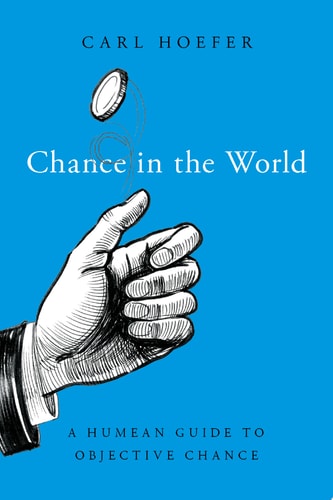
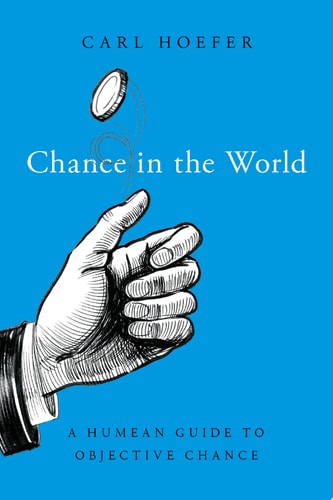
Chance in the World: A Humean Guide to Objective Chance
0
0
As an Amazon Associate and affiliate partner, Menrva Books earns from qualifying purchases. Learn more
Author Description
Probability has fascinated philosophers, scientists, and mathematicians for hundreds of years. Although the mathematics of probability is, for most applications, clear and uncontroversial, the interpretation of probability statements continues to be fraught with controversy and confusion. What does it mean to say that the probability of some event X occurring is 31%? In the 20th century a consensus emerged that there are at least two legitimate kinds of probability, and correspondingly at least two kinds of possible answers to this question of meaning. Subjective probability, also called 'credence' or 'degree of belief' is a numerical measure of the confidence of some person or some ideal rational agent. Objective probability, or chance, is a fact about how things are in the world. It is this second type of probability with which Carl Hoefer is concerned in this volume, specifically how we can understand the meaning of statements about objective probability. He aims to settle the question of what objective chances are, once and for all, with an account that can meet the demands of philosophers and scientists alike. For Hoefer, chances are constituted by patterns that can be discerned in the events that happen in our world. These patterns are ideally appropriate guides to what credences limited rational agents, such as ourselves, should have in situations of imperfect knowledge. By showing this, Hoefer bridges the gap between subjective probability and chance. In a field where few scholars have given adequate treatment to interpreting statements of chance, Hoefer develops a philosophically rich theory which draws on the disciplines of metaphysics, ontology, and philosophy of science.
Menrva's Summary
THE THESIS
This volume investigates the ontological status of objective probability, specifically addressing what it means for a chance statement to be true in a world governed by physical laws. Carl Hoefer, a philosopher specializing in the foundations of physics and metaphysics, constructs a Humean account of chance. He argues that objective probabilities are not fundamental properties of the universe but are instead patterns emerging from the totality of events. By linking these patterns to the rational expectations of agents, he provides a framework that reconciles objective chance with subjective credence.
THE SCOPE MAP
What You Will Find
- A defense of the Best System Account of chance.
- An analysis of the relationship between objective probability and subjective belief.
- Philosophical arguments regarding the nature of laws of nature and their connection to chance.
Scope Limits
- The text does not provide a comprehensive history of all probability interpretations.
- It does not focus on the purely mathematical or statistical applications of probability theory.
THE AUTHORITY PERSPECTIVE
Experts in the philosophy of science recognize this work as a significant contribution to the Humean tradition in metaphysics. Readers frequently note the technical density of the prose, which requires a strong background in contemporary analytic philosophy.
Page Count:
288
Publication Date:
2019-01-01
Publisher:
Oxford University Press
ISBN-10:
0190907436
ISBN-13:
9780190907433
Philosophy
Mathematics Statistics
Chance
Philosophy of
Mathematics - General
Metaphysics
Probabilities
Probability Theory
Epistemology
Community Tags
Other Editions(2)
Similar Books