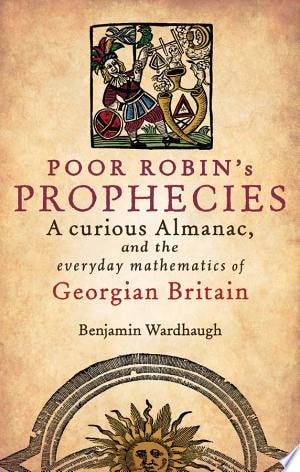
Poor Robin's Prophesies: A Curious Almanac, and the Everyday Mathematics of Georgian England
0
0
As an Amazon Associate and affiliate partner, Menrva Books earns from qualifying purchases. Learn more
Author Description
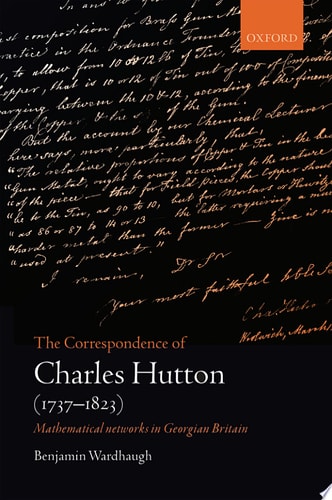
Author, astrologer, journalist, satirist, and 'well-willer to the mathematics', Poor Robin of Saffron Walden was a fantastic, yet invented, figure of British popular culture from the Restoration to the end of the Georgian period. Poor Robin's Almanac first appeared in 1662, developing an enthusiastic following and long outliving its original creator to last until 1828.Benjamin Wardhaugh tells the great story of Georgian popular mathematics - through Poor Robin's remarkable life, from his humble beginnings as an almanac-writer through to best-selling stardom, controversy, and decline. Using the character, wit, and columns of Poor Robin, Wardhaugh explores the mathematics of ordinary people, from learning sums to using mathematics in weighing and measuring, in business, agriculture, map-making, and navigation.This is a history of mathematics that is rarely thought about -- creative, popular, and led by practical and social needs. It is centered on the ordinary people that used it. Their names remain little-known; their solutions have vanished along with the situations that required them; but their energy and ideas - as captured by Poor Robin - create a wonderfully rich picture of what mathematics can be, and has been.
Menrva's Summary
THE THESIS
How did the intersection of popular culture and practical mathematics shape the daily lives of ordinary citizens in Georgian England? Benjamin Wardhaugh, a historian of science, utilizes the long-running publication 'Poor Robin's Almanac' as a primary lens to examine the democratization of mathematical knowledge. He argues that mathematics was not merely an academic pursuit but a vital, social tool used by common people for agriculture, commerce, and navigation throughout the 17th and 18th centuries.
THE SCOPE MAP
What You Will Find
- An analysis of the cultural impact of 'Poor Robin's Almanac' from 1662 to 1828.
- Historical documentation of how mathematics was applied to weighing, measuring, and business transactions.
- Examination of the role of popular media in disseminating scientific and mathematical literacy to the public.
- Case studies on the practical application of geometry and arithmetic in map-making and navigation during the Georgian period.
THE AUTHORITY PERSPECTIVE
Historians of science recognize this work as a significant contribution to the study of vernacular mathematics and the history of popular print culture. Readers frequently note the accessible yet rigorous approach Wardhaugh takes in connecting abstract mathematical concepts to the tangible social needs of the Georgian era.
Page Count:
256
Publication Date:
2012-10-25
Publisher:
Oxford University Press
ISBN-10:
0199605424
ISBN-13:
9780199605422
History
Biography
Science History
Social History
Georgian Era
Mathematics
Almanacs
Community Tags
Similar Books