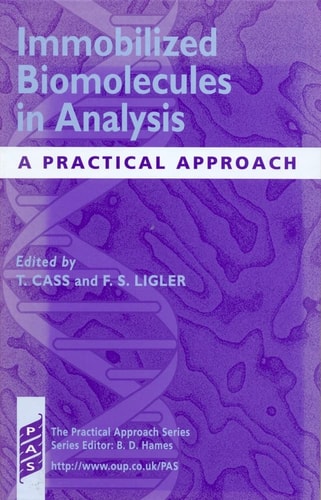
Immobilized Biomolecules in Analysis: A Practical Approach
0
0
As an Amazon Associate and affiliate partner, Menrva Books earns from qualifying purchases. Learn more
Author Description
Biosensors are rising to the forefront of technology because they show that humans can harness the incredible functions of living molecules and cells and use them in valuable ways. Biomolecules and cells are critical components of biosensors. In order for these components to function in an artificial environment, they must be immobilized in a way that does not affect their interactions. This useful book provides a selection of the most current methods for immobilizing biomolecules and cells on a variety of surfaces so that they retain their functionality. The book also includes analytical techniques for measuring the functionality of immobilized biomolecules. All of the protocols have been tried and validated by the authors. The methods are easily repeatable, and the authors have carefully crafted the instructions so that they can be used without an extensive prior knowledge of biochemistry.Research in biosensors is carried out in a wide variety of fields including biochemistry, chemistry, engineering, laboratory medicine, environmental and defense research. This guide will be invaluable to researchers in all of these disciplines.
Menrva's Summary
THE THESIS
This book investigates the practical methodologies required to successfully immobilize biomolecules and cells for use in biosensor technology without compromising their biological functionality. The editors, Tony Cass and Frances S. Ligler, compile a series of validated protocols designed to bridge the gap between biological activity and artificial surface integration. By focusing on repeatable procedures, the text provides a framework for researchers across diverse scientific disciplines to implement stable, functional biosensing components in laboratory and industrial settings.
THE SCOPE MAP
What You Will Find
- Comprehensive protocols for immobilizing biomolecules and cells on diverse surface types.
- Analytical techniques for verifying and measuring the functionality of immobilized components.
- Validated, repeatable experimental instructions suitable for researchers with varying levels of biochemical expertise.
- Applications relevant to biochemistry, environmental science, engineering, and defense research.
THE AUTHORITY PERSPECTIVE
Experts and researchers in the field of biosensor development frequently cite this work as a reliable, practical manual for laboratory implementation. The text is noted for its accessibility, providing clear instructions that allow practitioners to apply complex biochemical techniques without requiring an exhaustive background in the subject.
Page Count:
240
Publication Date:
1999-04-08
Publisher:
Oxford University Press
ISBN-10:
0199636370
ISBN-13:
9780199636372
Science
Biosensors
Biotechnology
Biochemistry
Chemistry
Engineering
Biomolecules
Community Tags
Similar Books