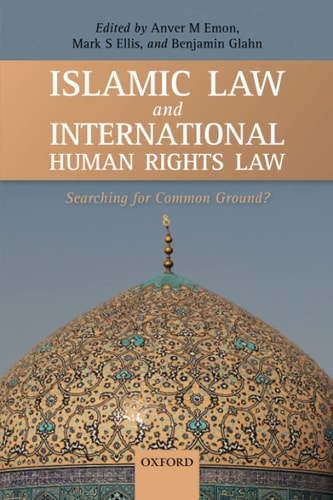
Islamic Law and International Human Rights Law
0
0
As an Amazon Associate and affiliate partner, Menrva Books earns from qualifying purchases. Learn more
Author Description
The relationship between Islamic law and international human rights law has been the subject of considerable, and heated, debate in recent years. The usual starting point has been to test one system by the standards of the other, asking is Islamic law 'compatible' with international human rights standards, or vice versa. This approach quickly ends in acrimony and accusations of misunderstanding. By overlaying one set of norms on another we overlook the deeply contextual nature of how legal rules operate in a society, and meaningful comparison and discussion is impossible.In this volume, leading experts in Islamic law and international human rights law attempt to deepen the understanding of human rights and Islam, paving the way for a more meaningful debate. Focusing on central areas of controversy, such as freedom of speech and religion, gender equality, and minority rights, the authors examine the contextual nature of how Islamic law and international human rights law are legitimately formed, interpreted, and applied within a community. They examine how these fundamental interests are recognized and protected within the law, and what restrictions are placed on the freedoms associated with them.By examining how each system recognizes and limits fundamental freedoms, this volume clears the ground for exploring the relationship between Islamic law and international human rights law on a sounder footing. In doing so it offers a challenging and distinctive contribution to the literature on the subject, and will be an invaluable reference for students, academics, and policy-makers engaged in the legal and religious debates surrounding Islam and the West.
Menrva's Summary
THE THESIS
This volume investigates the complex, often contentious relationship between Islamic law and international human rights law by moving beyond binary compatibility assessments. The authors, a group of leading legal experts, argue that traditional comparative methods often fail because they ignore the contextual application of legal norms within specific societies. By analyzing how these two systems form, interpret, and apply rules regarding fundamental freedoms, the contributors provide a framework for more nuanced academic and policy-oriented discourse.
THE SCOPE MAP
What You Will Find
- Comparative analysis of freedom of speech and religion within Islamic and international legal frameworks.
- Examination of gender equality and minority rights protections in diverse legal contexts.
- Methodological critique of standard compatibility testing between religious and secular legal systems.
- Case studies on the formation and application of legal rules within specific community settings.
THE AUTHORITY PERSPECTIVE
Experts and academics recognize this volume as a significant contribution to the field for its shift away from acrimonious debate toward contextual legal analysis. Readers frequently note the academic density of the prose, making it a primary resource for students and policy-makers engaged in international legal studies.
Page Count:
416
Publication Date:
2014-12-04
Publisher:
Oxford University Press
ISBN-10:
0199641455
ISBN-13:
9780199641451
International Law
Human rights
Law
Religion and Politics
Islamic Studies
Islamic Law
Community Tags
Similar Books