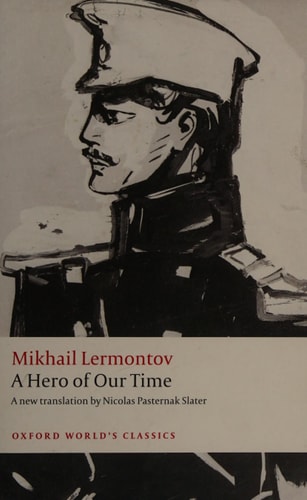
A Hero of Our Time
0
0
As an Amazon Associate and affiliate partner, Menrva Books earns from qualifying purchases. Learn more
Author Description
"After all that - how, you might wonder, could one not become a fatalist?"Here is a fine new translation of the first great Russian novel, A Hero of Our Time, which brings tales of Romantic adventure to a new pitch of intensity and reflection.Lermontov's hero, Pechorin, is a young army officer posted to the Caucasus, where his adventures--amorous and reckless--do nothing to alleviate his boredom and cynicism. World-weary and self-destructive, Pechorin is yet is full of passion and romantic ardor, sensitive as well as arrogant. The episodic narrative transports the reader from the breathtaking terrain of the Caucasus to the genteel surroundings of spa resorts. Told in an engaging yet pointedly ironic style, the story expresses Lermontov's own estrangement from the stifling conventions of bourgeois society and the oppression of Russian autocracy, but it also captures a longing for freedom through acts of love and bravery.Andrew Kahn's introduction sheds light on the novel's relation to orientalism and the ethnographic and anthropological discourses of the day, and his informative notes illuminate a wide range of historical, literary, and geographical references. This new edition is the only one to include Pushkin's Journey to Arzrum, in which Pushkin describes his own experiences of Russia's military campaigns in the Caucasus, offering a fascinating counterpoint to Lermontov's novel.About the Series: For over 100 years Oxford World's Classics has made available the broadest spectrum of literature from around the globe. Each affordable volume reflects Oxford's commitment to scholarship, providing the most accurate text plus a wealth of other valuable features, including expert introductions by leading authorities, voluminous notes to clarify the text, up-to-date bibliographies for further study, and much more.
Menrva's Summary
THE PULSE
The central conflict arises from the profound existential ennui and moral ambiguity of Pechorin, a cynical officer whose reckless actions disrupt the lives of those around him in the Caucasus. Pechorin navigates a series of encounters that test his capacity for connection and his commitment to a fatalistic worldview. The narrative is structured as a collection of interconnected stories, utilizing multiple perspectives and a non-linear timeline to peel back the layers of the protagonist's complex psyche. These accounts, ranging from personal journals to observational reports, reveal a man trapped between his own intellectual arrogance and a deep-seated desire for genuine experience. The harsh, rugged landscape of the Caucasus serves as both a physical challenge and a mirror to the volatile nature of the protagonist's internal state.
INSIDE THE PAGES
- Episodic narrative structure that shifts between different narrators and perspectives
- Exploration of the Byronic hero archetype through the character of Pechorin
- Vivid descriptions of the Caucasus mountain terrain and regional culture
- Use of irony and detached observation to critique social conventions
- Integration of personal diary entries to provide intimate psychological insight
- Themes of fatalism, boredom, and the search for meaning in a restrictive society
- Contrast between military duty and the pursuit of personal, often destructive, passions
- Inclusion of historical and ethnographic context regarding 19th-century Russian military life
THE COLLECTIVE ECHO
Readers and critics frequently identify this work as a foundational text in the development of the Russian psychological novel. Discussion often centers on the enigmatic nature of Pechorin, whose contradictions between sensitivity and cruelty continue to invite diverse interpretations. The pacing is noted for its deliberate shifts, which mirror the protagonist's own erratic behavior and shifting environments. Scholars highlight the effectiveness of the multi-layered narrative, which prevents the reader from ever fully settling into a single perspective on the hero's motives. The atmosphere is consistently described as both romantic and bleak, capturing the tension between individual freedom and the constraints of the era.
Page Count:
240
Publication Date:
2013-03-22
Publisher:
Oxford University Press
ISBN-10:
0199652686
ISBN-13:
9780199652686
Adventure
English
English & College Success
Romanticism
Russian
classic
Psychological
Europe - Fiction
Community Tags
Similar Books