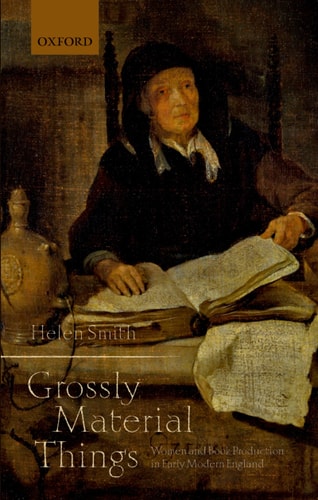
'Grossly Material Things': Women and Book Production in Early Modern England
0
0
As an Amazon Associate and affiliate partner, Menrva Books earns from qualifying purchases. Learn more
Author Description
In A Room of One's Own, Virginia Woolf described fictions as 'grossly material things', rooted in their physical and economic contexts. This book takes Woolf's brief hint as its starting point, asking who made the books of the English Renaissance, and what the material circumstances were in which they did so. It charts a new history of making and use, recovering the ways in which women shaped and altered the books of this crucial period, as co-authors, editors, translators, patrons, printers, booksellers, and readers.Drawing on evidence from a wide range of sources, including court records, letters, diaries, medical texts, and the books themselves, 'Grossly Material Things' moves between the realms of manuscript and print, and tells the stories of literary, political, and religious texts from broadside ballads to plays, monstrous birth pamphlets to editions of the Bible. In uncovering the neglected history of women's textual labours, and the places and spaces in which women went about the business of making, Helen Smith offers a new perspective on the history of books and reading. Where Woolf believed that Shakespeare's sister, had she existed, would have had no opportunity to pursue a literary career, 'Grossly Material Things' paints a compelling picture of Judith Shakespeare's varied job prospects, and promises to reshape our understanding of gendered authorship in the English Renaissance.
Menrva's Summary
THE THESIS
This book investigates the material and economic conditions of book production in the English Renaissance to determine the extent of women's involvement in the creation and dissemination of texts. Helen Miller Smith draws upon a diverse array of archival evidence, including court records, personal correspondence, and the physical artifacts of the period, to challenge the traditional narrative that women were excluded from the literary marketplace. By examining roles ranging from printers and patrons to translators and readers, the author constructs a framework that redefines authorship as a collaborative, gendered process rooted in tangible labor.
THE SCOPE MAP
What You Will Find
- Analysis of women's roles as co-authors, editors, translators, patrons, printers, and booksellers.
- Examination of diverse text types including broadside ballads, plays, medical texts, and religious editions.
- Methodology utilizing primary source evidence from court records, diaries, and letters.
- A historical reassessment of the material spaces and economic contexts of early modern book production.
THE AUTHORITY PERSPECTIVE
Scholars recognize this work as a significant intervention in the field of book history, specifically for its focus on the material realities of female labor. Experts frequently highlight the text for its ability to bridge the gap between manuscript culture and the rise of the printing press through a gendered lens.
Page Count:
272
Publication Date:
2012-08-18
Publisher:
Oxford University Press
ISBN-10:
0199651582
ISBN-13:
9780199651580
History
Book History
Book Industries And Trade
Literary Criticism
Great Britain
Women authors
Authorship
Community Tags
Similar Books