London is the Place for Me: Black Britons, Citizenship and the Politics of Race
0
0
As an Amazon Associate and affiliate partner, Menrva Books earns from qualifying purchases. Learn more
Author Description
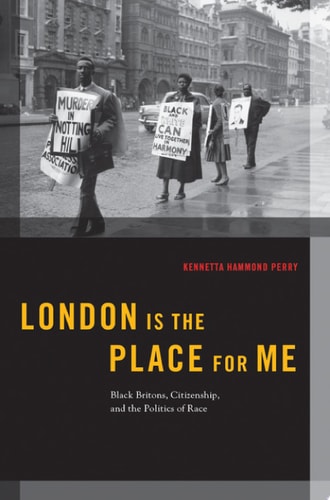
Black people in the British Empire have long challenged the notion that "there ain't no black in the Union Jack." For the post-World War II wave of Afro-Caribbean migrants, many of whom had long been subjects of the Empire, claims to a British identity and imperial citizenship were considered to be theirs by birthright. However, while Britain was internationally touted as a paragon of fair play and equal justice, they arrived in a nation that was frequently hostile and unwilling to incorporate Black people into its concept of what it meant to be British. Black Britons therefore confronted the racial politics of British citizenship and became active political agents in challenging anti-Black racism. In a society with a highly racially circumscribed sense of identity-and the laws, customs, and institutions to back it up-Black Britons had to organize and fight to assert their right to belong. In London Is The Place for Me, Kennetta Hammond Perry explores how Afro-Caribbean migrants navigated the politics of race and citizenship in Britain and reconfigured the boundaries of what it meant to be both Black and British at a critical juncture in the history of Empire and twentieth century transnational race politics. She situates their experience within a broader context of Black imperial and diasporic political participation, and examines the pushback-both legal and physical-that the migrants' presence provoked. Bringing together a variety of sources including calypso music, photographs, migrant narratives, and records of grassroots Black political organizations, London Is the Place for Me positions Black Britons as part of wider public debates both at home and abroad about citizenship, the meaning of Britishness and the politics of race in the second half of the twentieth century. The United Kingdom's postwar discriminatory curbs on immigration and explosion of racial violence forced White Britons as well as Black to question their perception of Britain as a racially prog
Menrva's Summary
THE THESIS
This work investigates how post-World War II Afro-Caribbean migrants challenged the exclusionary racial politics of British citizenship to assert their right to belong in the United Kingdom. Kennetta Hammond Perry, a scholar of Black British history, utilizes a diverse array of archival materials and cultural artifacts to analyze the intersection of imperial identity and domestic racial hostility. She argues that these migrants were not passive subjects but active political agents who reconfigured the boundaries of Britishness through grassroots organizing and transnational political participation.
THE SCOPE MAP
What You Will Find
- Analysis of the post-World War II Afro-Caribbean migration wave to Britain.
- Examination of legal and social mechanisms used to enforce racial exclusion.
- Integration of cultural sources including calypso music, photography, and personal narratives.
- Documentation of grassroots Black political organizations and their advocacy efforts.
Scope Limits
- The study focuses primarily on the second half of the twentieth century.
- It does not provide an exhaustive history of all Black populations in Britain prior to the post-war era.
THE AUTHORITY PERSPECTIVE
Scholars and historians recognize this text as a significant contribution to the study of the Black Atlantic and post-imperial British identity. Readers frequently note the academic rigor and the innovative use of cultural sources to supplement traditional political records.
Page Count:
331
Publication Date:
2016-01-01
Publisher:
Oxford University Press
ISBN-10:
0190493437
ISBN-13:
9780190493431
History
National Characteristics British
Modern History
Migration Studies
Citizenship
Great Britain
Blacks
Black studies
European History
British History
Sociology
Civil Rights
Community Tags
Similar Books