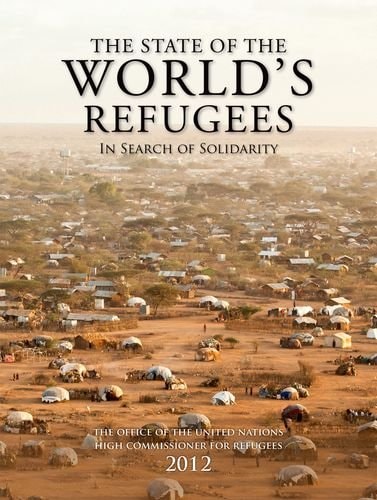
The State of the World's Refugees 2012: In Search of Solidarity
0
0
As an Amazon Associate and affiliate partner, Menrva Books earns from qualifying purchases. Learn more
Author Description
Sixty years after the establishment of the UNHCR, refugees - people who flee across an international border to escape war or persecution - remain at the core of the agency's work. But UNHCR is also called upon to aid people who are displaced within the borders of their own countries, and to address the plight of stateless persons - those not considered as citizens by any country. The book looks at UNHCR's work with these three groups, bringing readers up-to-date on developments since 2006, when the last edition in this series was published.Drawing on UNHCR's direct experience, eight chapters address key challenges, starting with the diminishing space for humanitarian action in places like Somalia and Afghanistan. Protracted conflicts mean that fewer refugees are able to return home, yet restrictive state policies limit possibilities for local integration and resettlement, and threaten the institution of asylum. Rising numbers are displaced within their own countries, driven from their homes by climate change and natural disasters, as well as by conflict and human rights abuses. Refugees and displaced people increasingly live in cities rather than in camps, and are harder to reach. Statelessness, an anachronism in the 21st century, is prevalent on all continents, leaving millions of lives in limbo. The closing chapter addresses the book's central theme: how to develop international solidarity to help states shoulder their responsibilities for the forcibly displaced. Case studies drawn from UNHCR's work in the field illustrate the issues.Now in its sixth edition, The State of the World's Refugees is an invaluable resource for academics, practitioners, policy makers, students and anyone interested in international politics and in the work of the UN refugee agency.
Menrva's Summary
THE THESIS
This report investigates the evolving challenges of global displacement and the urgent necessity for renewed international solidarity to protect the rights of refugees, internally displaced persons, and stateless individuals. The UNHCR, as the primary international body tasked with these issues, utilizes its extensive field experience and institutional data to analyze the shifting landscape of humanitarian aid since 2006. The text argues that traditional methods of asylum and resettlement are increasingly strained by protracted conflicts, restrictive state policies, and the complexities of urban displacement, necessitating a more cohesive global framework for responsibility-sharing.
THE SCOPE MAP
What You Will Find
- Analysis of humanitarian access in conflict zones such as Somalia and Afghanistan.
- Examination of the shift from camp-based aid to urban-based support for displaced populations.
- Case studies illustrating the impact of climate change and natural disasters on internal displacement.
- Evaluation of the legal and social status of stateless persons across multiple continents.
THE AUTHORITY PERSPECTIVE
Experts and policy makers recognize this volume as a foundational reference for understanding the operational realities of the UN refugee agency. Readers frequently note the density of the data and the clarity with which the text addresses the intersection of international law and humanitarian practice.
Page Count:
267
Publication Date:
2012-06-18
Publisher:
Oxford University Press
ISBN-10:
0199654751
ISBN-13:
9780199654758
Non-Fiction
History
Sociology
Human rights
International relations
Refugees
Community Tags
Similar Books