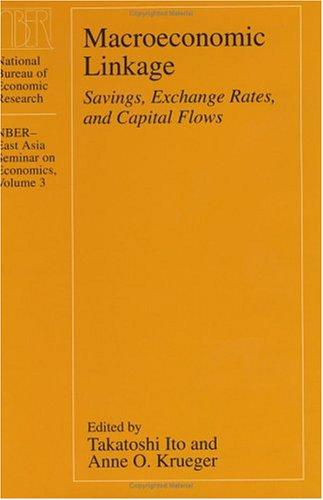
Macroeconomic Linkage
0
0
As an Amazon Associate and affiliate partner, Menrva Books earns from qualifying purchases. Learn more
Author Description
This volume explores the macroeconomic experience of East Asia in the 1980s and the impact of the region's growth on the rest of the world. The authors examine variables such as current account surpluses and deficits, as well as the ways in which exchange rate fluctuations in today's global economy affect the economies of countries not only in the same region but across the globe. These fourteen papers are organized around four themes: the overall determinants of growth and trading relations in the region; monetary policies in relation to capital controls and capital accounts; the impact of exchange rates on industrial structure; and the potential for greater regional integration. The contributors cover topics such as interactions among exchange rate movements, trade balances, and capital flows in Japan, Korea, and Taiwan, and the impact of exchange rates on industrial structure, inventories, and prices of both domestic and exported goods. One set of papers, examining the role of government monetary policy, reveals that when oil prices declined in Taiwan and the government loosened its monetary policy, growth increased without inflation. Another set of papers, focusing on the extent of regional integration in East Asia, finds that most of these nations' currencies are more closely tied to the dollar than to the yen. Macroeconomic Linkage offers a careful study of economic developments in East Asia that will be especially valuable to economists interested in international trade and exchange rates and to regional experts who focus on East Asia.
Menrva's Summary
THE THESIS
This volume investigates the macroeconomic dynamics of East Asia during the 1980s and their global repercussions. The book examines key variables such as current account balances and the influence of exchange rate fluctuations on economies worldwide. It is structured around four central themes: the determinants of regional growth and trade, monetary policies concerning capital controls, the impact of exchange rates on industrial structures, and the potential for enhanced regional integration. The contributors analyze interactions between exchange rates, trade, and capital flows in Japan, Korea, and Taiwan, as well as the effects of exchange rates on industrial organization and price levels.
THE SCOPE MAP
- Determinants of growth and trading relations in East Asia
- Monetary policies in relation to capital controls and capital accounts
- Impact of exchange rates on industrial structure
- Potential for greater regional integration
- Interactions among exchange rate movements, trade balances, and capital flows in Japan, Korea, and Taiwan
- Impact of exchange rates on industrial structure, inventories, and prices of both domestic and exported goods
- Analysis of government monetary policy, using Taiwan's experience with oil prices and loosened monetary policy as a case study
- Examination of currency ties, finding most East Asian nations' currencies are more closely tied to the dollar than the yen
THE AUTHORITY PERSPECTIVE
Macroeconomic Linkage is presented as a valuable resource for economists specializing in international trade and exchange rates, as well as for experts focused on the East Asian region. The collection of papers offers a detailed study of economic developments, providing insights into the complex interplay of growth, monetary policy, and currency fluctuations. The analysis of regional integration and the specific case studies from countries like Taiwan highlight the practical application of macroeconomic theories. The book aims to deepen understanding of how regional economic performance influences and is influenced by global economic trends.
Page Count:
401
Publication Date:
1994-01-01
ISBN-10:
0226386694
Non-Fiction
Economics
International Trade
East Asia
Community Tags
Similar Books