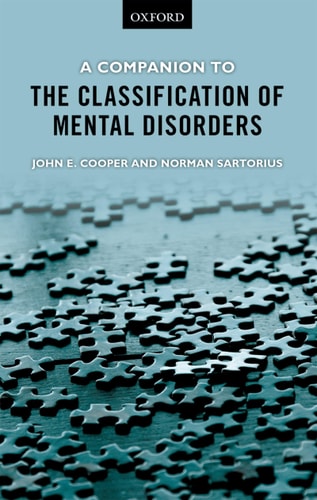
A Companion to the Classification of Mental Disorders
0
0
As an Amazon Associate and affiliate partner, Menrva Books earns from qualifying purchases. Learn more
Author Description
A Companion to the Classification of Mental Disorders provides essential reading as a background and supplement to both the recently produced DSM-5 and the forthcoming ICD-11. It focuses on the processes of classification and diagnosis, and the uses for these classifications. The book emphasises the dangers of regarding any current psychiatric classification as true or complete, in view of the present partial state of knowledge about the causes and mechanisms of most mental and behavioural disorders.This book is unique in containing a number of chapters that give a brief history of the cooperative efforts and projects necessary for the production of internationally agreed psychiatric classifications. The discussion begins in 1965 with the US/UK Diagnostic study, the preparations for ICD-8 with its first international glossary, and the International Pilot Study of Schizophrenia, designed and coordinated by the World Health Organization. While recognizing the importance of the innovations of the DSM series of classifications of the American Psychiatric Association, the book also takes a truly international perspective. The expert authors are well placed to do this, having been personally involved in many of the collaborative studies and developments discussed.A Companion to the Classification of Mental Disorders is an illustration of how much international collaborative work has been necessary over several decades to produce the currently agreed classifications. There is still a long way to go, but a start has been made.
Menrva's Summary
THE THESIS
This book investigates the historical development, methodological challenges, and collaborative processes required to establish international standards for the classification of mental disorders. The author, John E. Cooper, leverages his extensive professional background in international psychiatric research to examine the evolution of diagnostic systems. By analyzing the limitations of current frameworks like the DSM-5 and ICD-11, the text argues that psychiatric classification remains an incomplete, evolving project rather than a definitive scientific truth. It provides a critical framework for understanding how global cooperation has shaped modern clinical diagnosis.
THE SCOPE MAP
What You Will Find
- Historical analysis of the US/UK Diagnostic study starting in 1965.
- Examination of the collaborative efforts behind ICD-8 and the International Pilot Study of Schizophrenia.
- Comparative evaluation of the American Psychiatric Association's DSM series versus international standards.
- Discussion on the inherent limitations and partial knowledge regarding the mechanisms of mental and behavioral disorders.
THE AUTHORITY PERSPECTIVE
Experts recognize this work as a vital historical record of the international cooperation necessary to standardize psychiatric diagnosis. Readers frequently note the academic density of the prose, which serves as a specialized resource for clinicians and researchers interested in the evolution of diagnostic criteria.
Page Count:
158
Publication Date:
2013-11-01
Publisher:
Oxford University Press
ISBN-10:
019966949X
ISBN-13:
9780199669493
Psychology
Mental Health
Psychiatry
Mental Illness
Community Tags
Similar Books