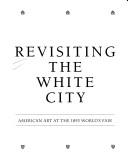
Revisiting the White City
0
0
As an Amazon Associate and affiliate partner, Menrva Books earns from qualifying purchases. Learn more
Author Description
When the doors to the Fine Arts Palace at the World's Columbian Exposition in Chicago opened in the spring of 1893, the American art inside was heralded as a triumph. Writing in Century Magazine, art critic Marianna G. Van Rensselaer proclaimed, "The Columbian Exhibition will prove to the most doubting and critical spirit that American art exists, that it is capable of great things, and that it can do great things in a way distinctly its own.". Fairgoers were treated to achievements such as Thomas Eakins's Gross Clinic, Winslow Homer's Eight Bells, Eastman Johnson's Cranberry Harvest, and countless other now well-known works, in addition to pieces by many lesser-known artists. Not only did the exposition show the apogee of American art, it also occurred at a moment of immense cultural change - two significant indications being Frederick Jackson Turner's thesis on the closing of the frontier and the recently completed national census which announced the population's shift from rural to urban areas. As Evan Turner, director of the Cleveland Museum of Art, has said, "The Fair shaped national culture as has no other event in the history of the country." The National Museum of American Art and the National Portrait Gallery of the Smithsonian institution spent five years researching the paintings and sculpture shown at the exposition and have jointly produced this - comprehensive commemorative volume and a centennial exhibition. A color plate section highlights 100 works of art featured in the exhibition. Historian Robert Rydell discusses the historical and cultural context of the fair, and Carolyn Kinder Carr adds to an understanding of the regional and gender prejudices that pervaded the American art arena at the time. An extensive catalogue section updates the complete 1893 checklist, providing much new information on the 521 artists and locations of the objects, and offering descriptions and illustrations of well over three-fourths of the 1,184 works originally disp
Menrva's Summary
THE THESIS
The book examines the significance of the art presented at the 1893 World's Columbian Exposition in Chicago and its role in shaping American cultural identity. The exposition's Fine Arts Palace showcased a triumph of American art, with works by Eakins, Homer, and Johnson, alongside numerous other artists, being hailed as evidence of a distinct American artistic voice. This volume, produced by the National Museum of American Art and the National Portrait Gallery, researches the paintings and sculpture displayed, placing them within a context of immense cultural change, including the closing of the frontier and the shift towards urban living. It delves into the historical and cultural backdrop of the fair, as well as the regional and gender prejudices prevalent in the American art world at the time.
THE SCOPE MAP
- Analysis of the historical and cultural context of the World's Columbian Exposition by historian Robert Rydell.
- Exploration of regional and gender prejudices within the American art arena at the time by Carolyn Kinder Carr.
- A comprehensive catalogue section updating the 1893 checklist with new information on 521 artists.
- Descriptions and illustrations of well over three-fourths of the 1,184 works originally displayed.
- A color plate section highlighting 100 featured works of art.
THE AUTHORITY PERSPECTIVE
This commemorative volume, a joint production of the National Museum of American Art and the National Portrait Gallery, offers a comprehensive look at the art featured in the 1893 World's Columbian Exposition. It is presented as a significant scholarly work, researched over five years, that aims to contextualize the artistic achievements of the era within broader cultural shifts. The book includes contributions from art historians and curators, providing both an overview of the exhibition's artistic merit and a detailed catalogue of the works and artists presented. The inclusion of essays discussing historical context and art world prejudices suggests a thorough and critical examination of the period.
Page Count:
408
Publication Date:
1993-01-01
ISBN-10:
0937311014
Art
Non-Fiction
History
Cultural History
American Art
Exhibitions
Art History
Community Tags
Similar Books