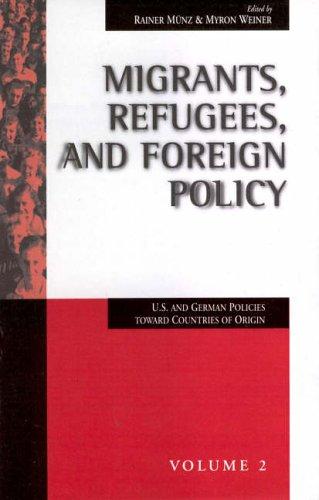
Migrants, Refugees, and Foreign Policy
0
0
As an Amazon Associate and affiliate partner, Menrva Books earns from qualifying purchases. Learn more
Author Description
Foreign policies have always played an important role in the movements of migrants. A number of essays in this volume show how the foreign policies of the United States and Germany have directly or inadvertently contributed to the influx from the former Yugoslavia, Mexico, the Caribbean, and the former Soviet Union. Now faced with growing resistance to admitting foreigners into their countries, both governments have once again been using foreign-policy instruments in an effort to change the conditions in the refugees' countries of origin that forced them to leave. This volume addresses questions such as which policies can influence governments to improve their human rights, protect minorities, end internal strife, reduce the level of violence, or improve economic conditions so that large numbers of people need not leave their homes.
Menrva's Summary
THE THESIS
The movement of people across borders is inextricably linked to the foreign policies of nations. This volume examines how the foreign policies of the United States and Germany have influenced migration from regions such as the former Yugoslavia, Mexico, the Caribbean, and the former Soviet Union. It further investigates the contemporary challenge of using foreign-policy instruments to alter conditions in countries of origin, aiming to reduce the impetus for people to leave their homes.
THE SCOPE MAP
- Analysis of how U.S. foreign policy has contributed to migration.
- Examination of German foreign policy's role in migrant influx.
- Case studies on migration from the former Yugoslavia.
- Exploration of factors driving migration from Mexico and the Caribbean.
- Discussion of policies aimed at improving human rights in countries of origin.
- Investigation into strategies for protecting minorities and reducing violence.
- Assessment of economic policy's impact on preventing forced migration.
THE AUTHORITY PERSPECTIVE
This collection of essays addresses critical questions at the intersection of foreign policy and migration. The contributors explore the direct and indirect ways national policies shape international population movements. The volume is likely to appeal to scholars and policymakers interested in the complex dynamics of refugee flows and the efficacy of foreign intervention in addressing root causes of displacement.
Page Count:
368
Publication Date:
1997-01-01
ISBN-10:
1571810870
History
Non-Fiction
Politics
Sociology
International relations
Community Tags
Similar Books