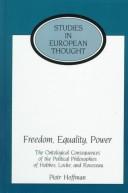
Freedom, Equality, Power
0
0
As an Amazon Associate and affiliate partner, Menrva Books earns from qualifying purchases. Learn more
Author Description
The concept of power shapes both the political philosophy and the general worldview of the modern age. For this reason, two areas of philosophy - ontology and political philosophy - which were hitherto treated separately, must be brought together. Freedom, Equality, Power brings out the ontological framework shared by the political philosophies of Hobbes, Locke, and Rousseau. In the last chapter (The Ontological Consequences), the author uses the results of his earlier analyses as the stepping stone for developing some themes belonging to ontology in general.
Menrva's Summary
THE THESIS
This book investigates the interconnectedness of power, freedom, and equality by bridging ontology and political philosophy. It examines how the concept of power has shaped modern political thought and worldview, arguing for a unified approach to these previously separate philosophical domains. The work specifically analyzes the ontological frameworks underpinning the political philosophies of Hobbes, Locke, and Rousseau, demonstrating their shared conceptual foundations.
THE SCOPE MAP
- Exploration of the concept of power in modern political philosophy and worldview.
- Integration of ontology and political philosophy for a comprehensive analysis.
- Examination of the ontological frameworks of Hobbes, Locke, and Rousseau.
- Analysis of the shared conceptual underpinnings of their political theories.
- Development of general ontological themes in the concluding chapter.
THE AUTHORITY PERSPECTIVE
The book is positioned as a significant contribution to political philosophy and ontology, aiming to bridge previously disparate fields of study. Its focus on the foundational concepts of power, freedom, and equality suggests a text intended for academic and advanced philosophical readers. The analysis of canonical political thinkers like Hobbes, Locke, and Rousseau indicates a scholarly approach to understanding the historical development of political thought.
Page Count:
383
Publication Date:
1999-01-01
ISBN-10:
0820441252
Philosophy
Science
Non-Fiction
Political Philosophy
Ontology
Community Tags
Similar Books