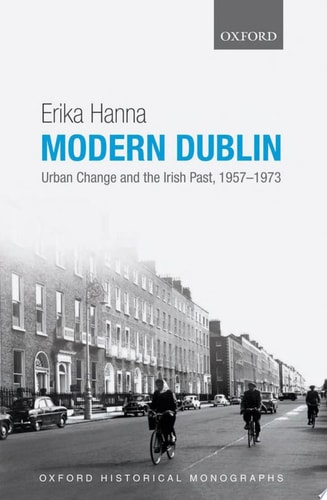
Modern Dublin: Urban Change and the Irish Past, 1957-1973
0
0
As an Amazon Associate and affiliate partner, Menrva Books earns from qualifying purchases. Learn more
Author Description
During the 1960s, the physical landscape of Dublin changed more than at any time since the eighteenth century. In this period, the government began to invest in town planning, new opportunities arose for the country's architects, and the old buildings of the core began to be replaced by modern structures. The early manifestations of this process were well received, understood as the first visible signs of prosperity and broader social and economic modernization. However, this attitude was short lived. By the end of the 1960s, popular support for urban change had evaporated; a disparate movement of preservationists, housing activists, students, and architects emerged to oppose urban change and campaign for the retention of the city's heritage. The new buildings and urban forms had not brought the promised national rejuvenation. Instead, the rapid destruction of the extant city had come to be seen as symbolic of the corruption and failed promise of modernization.Modern Dublin examines this story. Using approaches from urban studies and cultural geography, the author reveals Dublin as a place of complex exchange between a variety of interest groups with different visions for the built environment, and thus for society and the independent nation. In so doing, Erika Hanna adds to growing literatures on civil society, heritage, and cultural politics since independence, and provides a fresh approach to social and cultural change in 1960s Ireland.
Menrva's Summary
THE THESIS
This book investigates how the rapid physical transformation of Dublin between 1957 and 1973 reflected broader tensions regarding modernization, national identity, and the preservation of heritage in post-independence Ireland. Erika Hanna, a scholar of modern Irish history, utilizes a multidisciplinary framework that integrates urban studies and cultural geography to analyze the shifting public perception of urban development. She examines the transition from initial optimism regarding economic progress to the subsequent emergence of grassroots opposition movements that challenged the state's architectural agenda.
THE SCOPE MAP
What You Will Find
- Analysis of the 1960s Irish town planning initiatives and architectural shifts.
- Examination of the conflict between state-led modernization and preservationist activism.
- Integration of cultural geography and urban studies methodologies.
- Case studies on the social and political implications of the built environment in post-independence Ireland.
THE AUTHORITY PERSPECTIVE
Scholars and historians recognize this work as a significant contribution to the study of Irish civil society and cultural politics. Readers frequently note the academic rigor and the clarity with which the author connects physical urban changes to the evolving national identity of the period.
Page Count:
240
Publication Date:
2013-09-15
Publisher:
Oxford University Press
ISBN-10:
0199680450
ISBN-13:
9780199680450
History
Architecture
Ireland
Politics & Government
Social History
Urban Studies
Community Tags
Similar Books