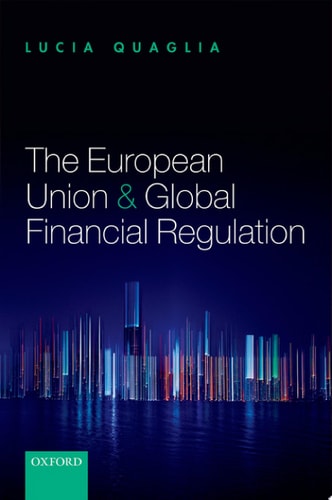
The European Union and Global Financial Regulation
0
0
As an Amazon Associate and affiliate partner, Menrva Books earns from qualifying purchases. Learn more
Author Description
The European Union and Global Financial Regulation examines the influence of the European Union (EU) in regulating global finance, addressing several inter-related questions. Why does the EU 'upload' international financial regulation in some cases, 'download' it in other cases, and 'cross-load' either actively or passively in other instances? Has this changed over time, especially after the third stage of Economic and Monetary Union and the completion of the single financial market, or after the global financial crisis? Under what conditions is the EU more or less likely to upload, download or cross load rules? Through which mechanisms does this take place? Overall, does the EU act as a pace setter in regulating global finance, or is it mainly a follower? Why?The key explanatory variable used in this research is the concept of 'regulatory capacity', applied to the EU and the US, distinguishing between 'strong' and 'weak' regulatory capacity. The influence of the EU in global financial regulation depends on the combinations of EU and US regulatory capacities. When EU regulatory capacity is weak and US regulatory capacity is strong, the US will mainly upload its domestic rules internationally and/or actively cross load them to the EU, whereas the EU will mainly download international rules. When the EU regulatory capacity is strong and US regulatory capacity is weak, the EU is able to upload its rules internationally and/or actively cross load them to third countries. When the EU and the US regulatory capacities are weak, private sector governance prevails. When the EU and US regulatory capacities are strong, both jurisdictions seek to upload and cross load their domestic rules.
Menrva's Summary
THE THESIS
This book investigates the mechanisms and conditions under which the European Union influences global financial regulation. Lucia Quaglia, a scholar of European political economy, utilizes the concept of 'regulatory capacity' to analyze the power dynamics between the EU and the United States. By examining historical shifts in financial governance, the author provides a framework for understanding whether the EU acts as a global pace-setter or a follower in the international financial system.
THE SCOPE MAP
What You Will Find
- Analysis of the 'uploading', 'downloading', and 'cross-loading' of financial rules.
- A comparative framework assessing the regulatory capacities of the EU and the US.
- Examination of the impact of the global financial crisis on regulatory policy.
- Discussion of the role of private sector governance in international finance.
THE AUTHORITY PERSPECTIVE
Experts recognize this work as a significant contribution to the study of international political economy and European integration. Readers frequently note the academic density of the prose, which makes it a foundational text for students and researchers focusing on financial governance and transatlantic regulatory relations.
Page Count:
208
Publication Date:
2014-08-26
Publisher:
Oxford University Press
ISBN-10:
0199688249
ISBN-13:
9780199688241
Economics
European Union
Comparative Politics
International relations
Finance
Community Tags
Similar Books