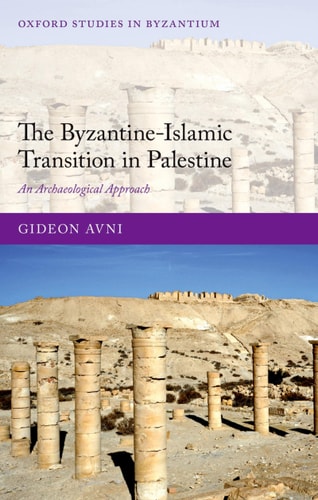
The Byzantine-Islamic Transition in Palestine: An Archaeological Approach
0
0
As an Amazon Associate and affiliate partner, Menrva Books earns from qualifying purchases. Learn more
Author Description
Using a comprehensive evaluation of recent archaeological findings, Avni addresses the transformation of local societies in Palestine and Jordan between the sixth and eleventh centuries AD. Arguing that these archaeological findings provide a reliable, though complex, picture, Avni illustrates how the Byzantine-Islamic transition was a much slower and gradual process than previously thought, and that it involved regional variability, different types of populations, and diverse settlement patterns.Based on the results of hundreds of excavations, including Avni's own surveys and excavations in the Negev, Beth Guvrin, Jerusalem, and Ramla, the volume reconstructs patterns of continuity and change in settlements during this turbulent period, evaluating the process of change in a dynamic multicultural society and showing that the coming of Islam had no direct effect on settlement patterns and material culture of the local population. The change in settlement, stemming from internal processes rather than from external political powers, culminated gradually during the Early Islamic period. However, the process of Islamization was slow, and by the eve of the Crusader period Christianity still had an overwhelming majority in Palestine and Jordan.
Menrva's Summary
THE THESIS
This volume investigates the nature of the transition from Byzantine to Islamic rule in Palestine and Jordan, challenging traditional narratives of rapid cultural and demographic upheaval. Gideon Avni, an expert in the archaeology of the Levant, synthesizes data from hundreds of excavations and his own field surveys to argue that the transformation was a gradual, internal process. By examining material culture and settlement patterns, the author demonstrates that the shift in societal structure occurred independently of immediate political changes.
THE SCOPE MAP
What You Will Find
- Analysis of settlement patterns in the Negev, Jerusalem, Beth Guvrin, and Ramla.
- Archaeological evidence spanning the sixth through the eleventh centuries AD.
- A comparative study of material culture and demographic continuity across the Byzantine-Islamic divide.
- Evaluation of the pace of Islamization relative to the persistence of Christian majorities.
THE AUTHORITY PERSPECTIVE
Experts recognize this work as a significant contribution to Levantine archaeology, particularly for its reliance on empirical excavation data rather than purely textual sources. Scholars frequently cite the text for its nuanced perspective on regional variability and the slow, evolutionary nature of social change in the early medieval period.
Page Count:
448
Publication Date:
2014-04-01
Publisher:
Oxford University Press
ISBN-10:
0199684332
ISBN-13:
9780199684335
History
Islamic History
Archaeology
Middle East
Palestine
Community Tags
Similar Books