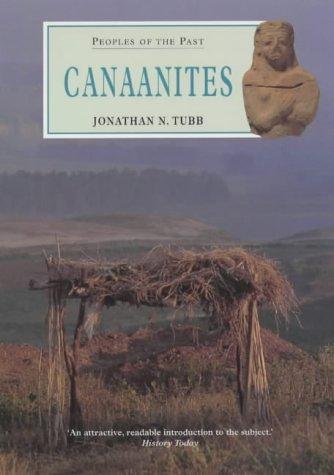
Canaanites
0
0
As an Amazon Associate and affiliate partner, Menrva Books earns from qualifying purchases. Learn more
Author Description
Canaanites explores the ancient population of the Western Levant (Israel, Transjordan, Lebanon, and coastal Syria), examining the development of its distinctive culture from the early farming communities of the eighth millennium B.C. to the fragmentation of its social and cultural ideals in the latter half of the first millennium B.C. Jonathan N. Tubb makes judicious use of the Hebrew Bible in describing Canaanite culture. He views the Bible as a rich resource for understanding the literary and theological heritage of Israel, which he classifies as a subculture of Canaan. At the same time he reveals the limitations of the Bible as a historical document, arguing that to reconstruct the Canaanites’ history we must first look at the archaeological data. Tubb stresses the continuity of Canaanite civilization, portraying events such as the imposition of Egyptian imperial rule and the development of historical Israel as episodic interruptions.
Menrva's Summary
THE THESIS
The Canaanites, a civilization flourishing in the Western Levant, faced the challenge of maintaining their distinct cultural identity against external pressures and internal fragmentation. Jonathan N. Tubb's work examines the evolution of Canaanite culture from its Neolithic origins to its decline in the first millennium B.C. The book critically engages with the Hebrew Bible as a source for understanding Israelite heritage, while prioritizing archaeological data for reconstructing Canaanite history. Tubb emphasizes the enduring nature of Canaanite civilization, viewing significant events like Egyptian imperial rule and the rise of historical Israel as transient disruptions.
THE SCOPE MAP
- Exploration of the Western Levant's population, encompassing modern-day Israel, Transjordan, Lebanon, and coastal Syria.
- Chronological scope from early farming communities of the 8th millennium B.C. to the fragmentation of social and cultural ideals in the latter half of the 1st millennium B.C.
- Judicious use of the Hebrew Bible as a resource for understanding Israel's literary and theological heritage, while acknowledging its limitations as a historical document.
- Emphasis on archaeological data as the primary source for reconstructing Canaanite history.
- Analysis of the continuity of Canaanite civilization, framing events like Egyptian imperial rule and the development of historical Israel as episodic interruptions.
- Discussion of Canaan as a cultural predecessor to Israel, with Israel classified as a subculture of Canaan.
THE AUTHORITY PERSPECTIVE
The book is regarded as a scholarly examination of the Canaanite civilization, drawing upon both biblical texts and archaeological evidence. Tubb's approach highlights the resilience of Canaanite culture against historical upheavals, positioning it as a foundational element of the region's subsequent history. The work is likely to appeal to academics and students of ancient history and archaeology interested in the complex interactions between different cultures in the ancient Near East. It provides a comprehensive overview that stresses continuity over radical change in the region's development.
Page Count:
160
Publication Date:
2002-01-01
ISBN-10:
0714127663
ISBN-13:
9780714127668
Non-Fiction
History
Archaeology
Community Tags
Similar Books