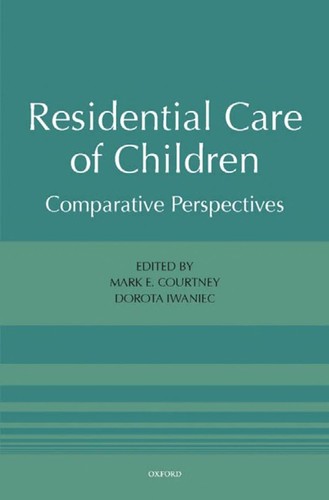
Residential Care of Children
0
0
As an Amazon Associate and affiliate partner, Menrva Books earns from qualifying purchases. Learn more
Author Description
Residential Care of Children fills major gaps in knowledge about residential care of children, and is sure to inform ongoing debates within and between nations about the appropriate use of such institutions. Each "case study" chapter provides a rich description of the development, current status, and future of residential care in countries from Brazil to Botswana. Chapters describe how residential care is defined in the country in question, how it has evolved over time, including its history, trends over time, and any "landmark" events in the history of residential care. Authors examine factors (historical, political, economic, ideological, and cultural) that have contributed to the observed pattern of development of residential care and provide a description of the current state of residential care (number of children in care, ages, average length of stay, reasons that children/youth are placed in residential care, etc.). Lastly, each case study describes expected future directions for residential care and potential concerns. Two integrative chapters provide a critical cross-national perspective, identifying common themes, analyzing underlying factors, and speculating about the future of residential child care across the globe. This insight-filled book will be required reading for all child welfare scholars, particularly as international perspectives become increasingly emphasized.--Jacket.
Menrva's Summary
THE THESIS
This book investigates the global landscape of residential child care institutions, addressing critical knowledge gaps and informing international policy debates. It examines the development, current status, and future trajectories of residential care across diverse nations, including Brazil and Botswana. Each country-specific chapter details the definition, historical evolution, and defining events of residential care, analyzing the contributing historical, political, economic, ideological, and cultural factors. The authors present current statistics on children in care, their ages, lengths of stay, and reasons for placement, concluding with future projections and potential concerns for each region.
THE SCOPE MAP
- Detailed case studies of residential child care in countries spanning Brazil to Botswana.
- Analysis of the historical, political, economic, ideological, and cultural factors shaping residential care.
- Description of the current state of residential care, including numbers of children, ages, and reasons for placement.
- Examination of the evolution and trends in residential care over time within each country.
- Exploration of future directions and potential concerns for residential child care globally.
- Integrative chapters offering a cross-national perspective on common themes and underlying factors.
- Required reading for child welfare scholars and professionals engaged in international perspectives.
THE AUTHORITY PERSPECTIVE
The book is positioned as essential reading for child welfare scholars, particularly those focusing on international perspectives, due to its comprehensive coverage of residential child care institutions. The jacket copy highlights its role in filling significant knowledge gaps and informing ongoing debates about the appropriate use of such institutions. By providing rich case studies from various countries and integrative cross-national analysis, it aims to offer deep insight into the complexities of global child care.
Page Count:
217
Publication Date:
2009-01-01
ISBN-10:
0195309189
ISBN-13:
9780195309188
Politics
Non-Fiction
Psychology
History
Child Welfare
International Studies
Social policy
Sociology
Case studies
Community Tags
Similar Books