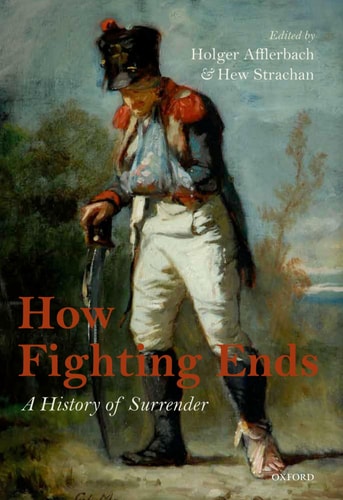
How Fighting Ends: A History of Surrender
0
0
As an Amazon Associate and affiliate partner, Menrva Books earns from qualifying purchases. Learn more
Author Description
There are many histories of how wars have begun, but very few which discuss how they have ended. This book fills that gap. Beginning with the Stone Age and ending with globalized terrorism, it addresses the specific issue of surrender, rather than the subsequent establishment of peace. At its heart is the individual warrior or soldier, and his or her decision to lay down arms. In the ancient world surrender led in most cases to slavery, but a slave still lived rather than died. In the modern world international law gives the soldiers rights as prisoners of war, and those rights include the prospect of their eventual return home. But individuals can surrender at any point in a war, and without having such an effect that they end the war. The termination of hostilities depends on a collective act for its consequences to be decisive. It also requires the enemy to accept the offer to surrender in the midst of combat. In other words, like so much else in war, surrender depends on reciprocity - on the readiness of one side to stop fighting and of the other to accept that readiness. This volume argues that surrender is the single biggest contributor to the containment of violence in warfare, offering the vanquished the opportunity to survive and the victor the chance to show moderation and magnanimity. Since the rules of surrender have developed over time, they form a key element in understanding the cultural history of warfare.
Menrva's Summary
THE THESIS
This book investigates the historical evolution and strategic function of surrender as the primary mechanism for containing violence in warfare. Historians Holger Afflerbach and Hew Strachan examine the transition from ancient practices of enslavement to modern international legal frameworks governing prisoners of war. By analyzing the decision-making process of individual soldiers alongside the collective requirements for ending hostilities, the authors argue that surrender is a critical, reciprocal act that defines the cultural history of conflict.
THE SCOPE MAP
What You Will Find
- A comprehensive historical timeline spanning from the Stone Age to the era of globalized terrorism.
- Analysis of the legal and ethical evolution of prisoner of war status.
- Examination of the reciprocal nature of surrender and its role in limiting total destruction.
- Case studies illustrating the shift from individual survival strategies to state-level termination of hostilities.
THE AUTHORITY PERSPECTIVE
Experts recognize this work as a significant contribution to military history for its focus on a neglected aspect of conflict termination. Readers frequently note the academic rigor and the broad historical scope that provides a fresh perspective on the mechanics of ending wars.
Page Count:
520
Publication Date:
2012-09-29
Publisher:
Oxford University Press
ISBN-10:
0199693625
ISBN-13:
9780199693627
History
Military History
Warfare
War
International relations
Community Tags
Similar Books