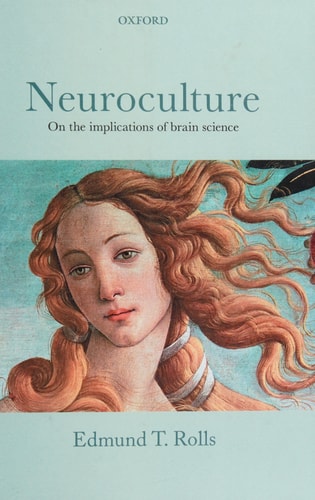
Neuroculture: On the Implications of Brain Science
0
0
As an Amazon Associate and affiliate partner, Menrva Books earns from qualifying purchases. Learn more
Author Description
Why do we have emotions? What are the bases of social behaviour? What is the relationship between the mind and the brain? How, and why, do we appreciate art? How do we make decisions? Are there biological foundations to ethical behaviour? Why do people follow religions, or believe in life after death?These wide-ranging, but important questions are just some of those considered in this exploration of the field of neuroscience, and how it can crucially inform our knowledge across a range of seemingly unrelated disciplines.'Neuroculture' considers the implications of our modern understanding of how the brain works, how it was shaped by evolution, and how it can help us understand many mental issues central to everyday life.The book starts with a look at emotions and how they are important in our behaviour. It then considers social behaviour, looking at the adaptive differences between men and women. The next chapter considers emotion and rationality, and the mechanisms of decision making. In the following chapter, the author looks at philosophical issues, considering the relationship between the mind and brain, and considering whether the hardware/software distinction in a computer might tell us something about mind-brain interactions. The following chapter considers neuroaesthetics - the biological foundations of our appreciation of art - including visual art, literature, and music. Is art a useless ornament? Is music, to quote Steven Pinker, really just 'auditory cheescake'?After this, the author looks at the field of neuroeconomics - how neuroscience is informing us about how we make economic choices. The wide-ranging chapters that follow consider neuroethics - the biological foundations of ethical behaviour, neuropsychiatry - the connection between neural functioning and psychiatric disorders, neuroreligion - the possible biological foundations of religious belief, and neuropolitics - how our knowlege of the emotion and rational reasoning systems might help us deve
Menrva's Summary
THE THESIS
This work investigates how contemporary neuroscientific discoveries regarding brain function and evolutionary biology provide a framework for understanding complex human behaviors, social structures, and cultural phenomena. Edmund T. Rolls, a distinguished neuroscientist, synthesizes data from neural architecture and evolutionary psychology to argue that biological mechanisms underpin facets of life traditionally reserved for the humanities. The text systematically applies these findings to fields ranging from aesthetics and economics to ethics and religion, proposing that a neuro-centric perspective clarifies the origins of human decision-making and social interaction.
THE SCOPE MAP
What You Will Find
- Analysis of the evolutionary origins of human emotion and its role in rational decision-making processes.
- Exploration of neuroaesthetics, examining the biological basis for the appreciation of art, literature, and music.
- Application of neuroeconomic and neuropolitical frameworks to explain individual and collective choice behaviors.
- Investigation into the neural correlates of religious belief, ethical systems, and psychiatric disorders.
THE AUTHORITY PERSPECTIVE
Experts recognize this text as a comprehensive bridge between hard biological science and the social sciences. Readers frequently note the density of the prose, which requires a foundational understanding of neuroscience to fully grasp the author's interdisciplinary arguments.
Page Count:
400
Publication Date:
2012-01-13
Publisher:
Oxford University Press
ISBN-10:
0199695474
ISBN-13:
9780199695478
Non-Fiction
Psychology
Philosophy
Science
Neurosciences
Brain
Neuroscience
Community Tags
Similar Books