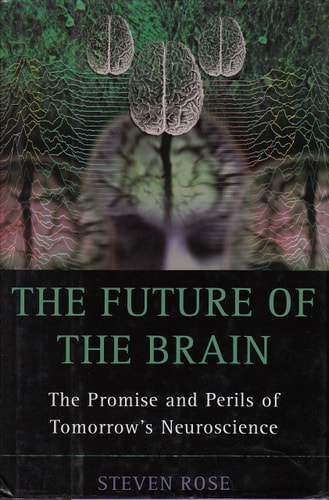
The Future of the Brain: The Promise and Perils of Tomorrow's Neuroscience
0
0
As an Amazon Associate and affiliate partner, Menrva Books earns from qualifying purchases. Learn more
Author Description
Brain repair, smart pills, mind-reading machines--modern neuroscience promises to soon deliver a remarkable array of wonders as well as profound insight into the nature of the brain. But these exciting new breakthroughs, warns Steven Rose, will also raise troubling questions about what it means to be human.In The Future of the Brain, Rose explores just how far neuroscience may help us understand the human brain--including consciousness--and to what extent cutting edge technologies should have the power to mend or manipulate the mind. Rose first offers a panoramic look at what we now know about the brain, from its three-billion-year evolution, to its astonishingly rapid development in the embryo, to the miraculous process of infant development (how a brain becomes a human). More important, he shows what all this science can--and cannot--tell us about the human condition. He examines questions that still baffle scientists: if our genes are 99% identical to those of chimpanzees, if our brains are composed of identical molecules, arranged in pretty similar cellular patterns, how come we are so different? And he explores the potential threats and promises of new technologies and their ethical, legal, and social implications, wondering how far we should go in eliminating unwanted behavior or enhancing desired characteristics, focusing on the new "brain steroids" and on the use of Ritalin to control young children.The Future of the Brain is a remarkable look at what the brain sciences are telling us about who we are and where we came from--and where we may be headed in the years ahead.
Menrva's Summary
THE THESIS
This book investigates the extent to which modern neuroscience can explain the human condition while simultaneously addressing the ethical dilemmas posed by emerging brain-manipulation technologies. Steven Rose, a prominent neurobiologist, utilizes his extensive background in brain research to synthesize current scientific knowledge regarding consciousness, genetics, and development. He argues that while our understanding of the brain has advanced significantly, there remains a critical need to evaluate the social and moral consequences of applying these findings to human behavior and cognitive enhancement.
THE SCOPE MAP
What You Will Find
- A comprehensive overview of brain evolution spanning three billion years.
- Analysis of embryonic and infant brain development processes.
- Ethical frameworks regarding the use of pharmaceuticals like Ritalin for behavioral control.
- Critical examination of the limitations of genetic and molecular explanations for human consciousness.
THE AUTHORITY PERSPECTIVE
Experts and readers frequently note that Rose provides a balanced, accessible entry point into complex neurobiological debates. The text is widely recognized for its ability to bridge the gap between hard science and the philosophical implications of future technological interventions in the human mind.
Page Count:
352
Publication Date:
2005-04-01
Publisher:
Oxford University Press
ISBN-10:
0195154207
ISBN-13:
9780195154207
Philosophy
Science
Psychology
Neurosciences
Neuroscience
Allied Health
Brain
Biology
Ethics
Medical
Community Tags
Similar Books