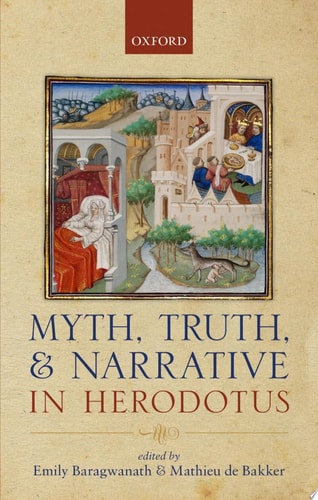
Myth, Truth, and Narrative in Herodotus
0
0
As an Amazon Associate and affiliate partner, Menrva Books earns from qualifying purchases. Learn more
Author Description
Herodotus, the "Father of History," is infamously known for having employed elements more akin to mythological tales than to unvarnished "truth" in translating his historical research into narrative form. While these narratives provide valuable source material, he could not have surmised the hostile reception his work would receive in later generations. This mythical aspect of the Histories led many successors, most notoriously Plutarch, to blame Herodotus for spinning far-fetched lies, and to set him apart as an untrustworthy historian. Echoes of the same criticism resounded in twentieth-century scholarship, which found it difficult to reconcile Herodotus' ambition to write historical stories "as they really happened" with the choices he made in shaping their form.This volume brings together 13 ground-breaking essays written by specialists in the fields of ancient Greek literature and history. Each article seeks to review, re-establish, and rehabilitate the origins, forms, and functions of the Histories' mythological elements. These contributions throw new light on Herodotus' talents as a narrator, underline his versatility in shaping his work, and reveal how he was inspired by and constantly engaged with his intellectual milieu. The Herodotus who emerges is a Herculean figure, dealing with a vast quantity of material, struggling with it as with the Hydra's many-growing heads, and ultimately rising with consummate skill to the organizational and presentational challenges it posed. The volume ultimately concludes that far from being unrelated to the "historical" aspects of Herodotus' text, the "mythic" elements prove vital to his presentation of history.
Menrva's Summary
THE THESIS
This volume investigates the long-standing scholarly tension between the historical accuracy of Herodotus and his frequent integration of mythological narratives. The editors, Emily Baragwanath and Mathieu de Bakker, curate a collection of thirteen essays that challenge the traditional dismissal of Herodotus as an unreliable source. By analyzing the structural and functional roles of myth within the Histories, the contributors argue that these elements are not mere fabrications but essential components of his historical methodology and narrative strategy.
THE SCOPE MAP
What You Will Find
- Analysis of the historiographical reception of Herodotus from antiquity to the twentieth century.
- Examination of the intellectual milieu and literary influences shaping the Histories.
- Case studies focusing on specific narrative techniques and the integration of mythic motifs.
- Re-evaluation of Herodotus as a deliberate and versatile narrator managing complex historical data.
THE AUTHORITY PERSPECTIVE
Experts recognize this collection as a significant contribution to the ongoing rehabilitation of Herodotus within classical scholarship. The text is noted for its academic rigor and is considered a valuable resource for students and researchers exploring the intersection of ancient literature and historical inquiry.
Page Count:
384
Publication Date:
2012-11-08
Publisher:
Oxford University Press
ISBN-10:
0199693978
ISBN-13:
9780199693979
History
Literary Criticism
Herodotus
Ancient History
Historiography
Community Tags
Similar Books