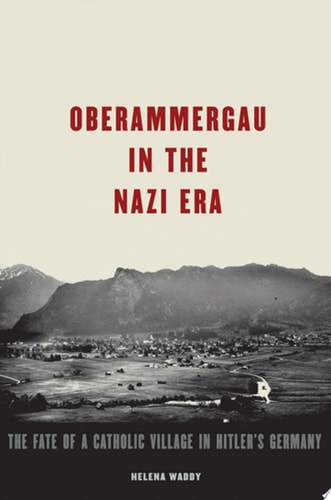
Oberammergau in the Nazi Era
0
0
As an Amazon Associate and affiliate partner, Menrva Books earns from qualifying purchases. Learn more
Author Description
In Her Study Of Oberammergau, The Bavarian Village Famous For Its Decennial Passion Play, Helena Waddy Argues Against The Traditional Image Of The Village As A Nazi Stronghold. She Uses Oberammergau's Unique History To Explain Why And How Genuinely Some Villagers Chose To Become Nazis, While Others Rejected Party Membership And Defended Their Catholic Lifestyle. She Explores The Reasons For Which Both Local Nazis And Their Opponents Fought To Protect The Village's Cherished Identity Against The Third Reich's Many Intrusive Demands. She Also Shows That The Play Mirrored The Gospel-based Anti-semitism Endemic To Western Culture.
Menrva's Summary
THE THESIS
This work investigates the complex relationship between the Bavarian village of Oberammergau and the Nazi Party, challenging the prevailing narrative that the village was a monolithic stronghold for the regime. Helena Waddy, a historian specializing in German social and religious history, utilizes extensive archival research and local records to examine the motivations of villagers during the Third Reich. She argues that the village's identity was not defined solely by political alignment, but by a tension between Catholic tradition and the intrusive demands of the Nazi state. The study provides a nuanced framework for understanding how local communities navigated the pressures of totalitarianism while attempting to preserve their unique cultural heritage.
THE SCOPE MAP
What You Will Find
- An analysis of the decennial Passion Play as a reflection of historical anti-semitism.
- A detailed examination of local political divisions between Nazi Party members and those who resisted.
- Primary source evidence including village records, personal testimonies, and party documentation.
- A study of the conflict between traditional Catholic identity and the ideological encroachment of the Third Reich.
THE AUTHORITY PERSPECTIVE
Experts recognize this text as a significant contribution to the social history of Nazi Germany, specifically for its focus on rural community dynamics. Readers frequently note the academic rigor of the research and the author's ability to balance local history with broader national political contexts.
Page Count:
352
Publication Date:
2010-01-01
Publisher:
Oxford University Press
ISBN-10:
0199707790
ISBN-13:
9780199707799
Religion
History
Germany
European History
Community Tags
Similar Books