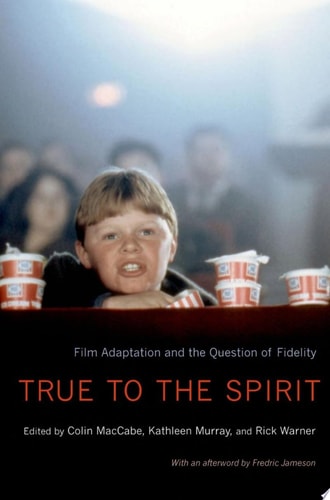
True to the Spirit
0
0
As an Amazon Associate and affiliate partner, Menrva Books earns from qualifying purchases. Learn more
Author Description
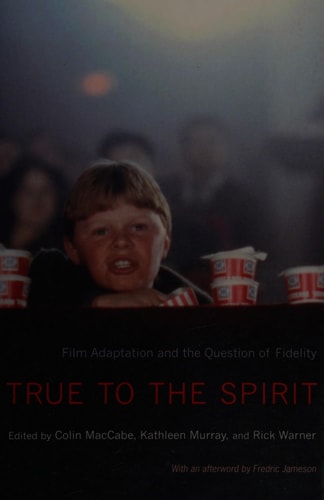
Fifty Percent Of Hollywood Productions Each Year Are Adaptations--films That Use An Already Published Book, Dramatic Work, Or Comic As Their Source Material. If The Original Is Well Known, Then For Most Spectators The Question Of Whether These Adaptations Are True To The Spirit Of The Original Is Central. The Recent Wave Of Adaptation Studies Dismisses The Question Of Fidelity As Irrelevant, Mistaken, Or An Affront To The Unstable Nature Of Meaning Itself. The Essays Gathered Here, Mixing The Field's Top Authorities (andrew, Gunning, Jameson, Mulvey, And Naremore) With Fresh New Voices, Take The Question Of Correspondence Between Source And Adaptation As Seriously As Do Producers And Audiences. Spanning Examples From Shakespeare To Ghost World, And Addressing Such Notable Directors As Welles, Kubrick, Hawks, Tarkovsky, And Ophuls, The Contributors Write Against The Grain Of Recent Adaption Studies By Investigating The Question Of What Fidelity Might Mean In Its Broadest And Truest Sense, What It Might Reveal Of The Adaptive Process, And Why It Is Still One Of The Richest Veins Of Investigation In The Study Of Cinema.
Menrva's Summary
THE THESIS
This collection of essays investigates whether the concept of fidelity remains a valid and meaningful framework for evaluating cinematic adaptations of literary and dramatic works. The editors, Colin MacCabe, Kathleen Murray, and Rick Warner, curate a series of contributions from established scholars and emerging voices to challenge the prevailing academic trend that dismisses fidelity as an irrelevant metric. By examining the relationship between source material and film, the authors argue that the question of correspondence is essential to understanding both the adaptive process and the expectations of audiences and producers.
THE SCOPE MAP
What You Will Find
- Analysis of diverse source materials ranging from Shakespearean plays to contemporary graphic novels like Ghost World.
- Critical examinations of directorial approaches by figures such as Orson Welles, Stanley Kubrick, Howard Hawks, Andrei Tarkovsky, and Max Ophuls.
- Theoretical arguments that push back against the current academic consensus in adaptation studies.
- Explorations of the broader implications of fidelity regarding meaning, interpretation, and the mechanics of cinematic translation.
THE AUTHORITY PERSPECTIVE
Scholars and students of film theory frequently cite this work as a necessary counterpoint to the dominant discourse in adaptation studies. Experts highlight the text as a significant resource for those interested in the ongoing debate between formalist film theory and audience-centered interpretation.
Page Count:
0
Publication Date:
2011-01-01
Publisher:
Oxford University Press
ISBN-10:
0199705526
ISBN-13:
9780199705528
Non-Fiction
Film Studies
Adaptation Studies
Cinema
Community Tags
Similar Books