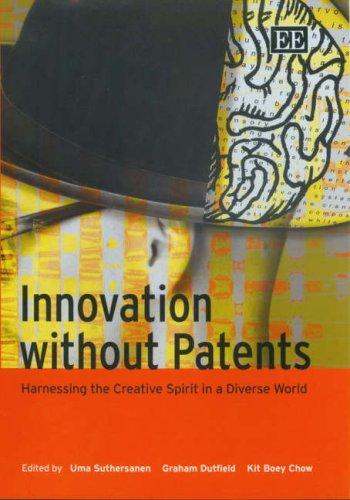
Innovation without Patents
0
0
As an Amazon Associate and affiliate partner, Menrva Books earns from qualifying purchases. Learn more
Author Description
This book is concerned with the extent to which innovations should or should not be protected as intellectual property, and the implications this has upon the ability of local manufacturers to learn to innovate. A question the book considers is how far legal protection should extend to inventions that may only just, or indeed not quite, meet the conventional criteria for patentability, in terms of the level of inventiveness. Innovation without Patents offers a thoughtful and empirically rich analysis of the current system in a number of developed and developing countries in the Asia-Pacific. It asks whether such innovations should remain free from patenting, or whether alternative intellectual property regimes should be offered in such cases, and indeed whether the requirements change depending on a country's level of development. This discussion is capped by a number of proposed policy options. The theoretical and practical approaches to intellectual property rights, innovation and development policy formulation make Innovation without Patents accessible to academics, national and regional patent offices, national overseas development agencies, NGOs and patent attorneys--Jacket.
Menrva's Summary
THE THESIS
This book investigates the complex relationship between intellectual property protection and the capacity for innovation, particularly for local manufacturers. It examines the extent to which innovations that do not fully meet conventional patentability criteria should be protected, and the implications for learning and development in countries across the Asia-Pacific region. The analysis considers whether such innovations should remain free from patenting, or if alternative intellectual property regimes are more appropriate, potentially varying by a country's developmental stage. The work proposes policy options based on theoretical and practical approaches to intellectual property rights, innovation, and development policy.
THE SCOPE MAP
- Analysis of intellectual property protection for innovations not meeting conventional patentability criteria.
- Exploration of the implications for local manufacturers' ability to learn and innovate.
- Empirical analysis of current systems in developed and developing countries in the Asia-Pacific.
- Discussion on whether innovations should remain free from patenting or have alternative IP regimes.
- Consideration of how a country's level of development influences IP requirements.
- Proposed policy options for intellectual property rights, innovation, and development.
THE AUTHORITY PERSPECTIVE
The book offers a thoughtful and empirically rich analysis of intellectual property systems in the Asia-Pacific, making it accessible to a diverse audience including academics, patent offices, development agencies, NGOs, and patent attorneys. Its focus on the practical implications of patentability for local manufacturers and its consideration of varying developmental levels suggest a valuable contribution to policy formulation in the field. The work aims to provide a nuanced perspective on how intellectual property frameworks can either foster or hinder innovation, particularly in emerging economies. The proposed policy options are grounded in both theoretical understanding and practical application.
Page Count:
206
Publication Date:
2007-01-01
ISBN-10:
1845429591
ISBN-13:
9781845429591
Politics
Non-Fiction
Economics
Innovation
Intellectual Property
Patent Law
Community Tags
Similar Books