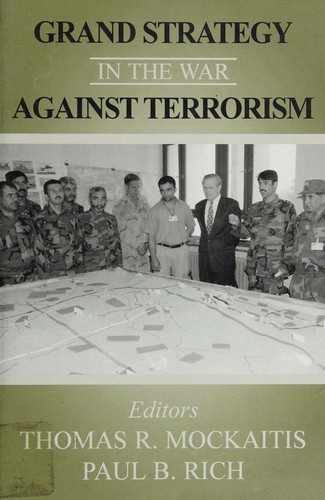
Grand Strategy in the War Against Terrorism
0
0
As an Amazon Associate and affiliate partner, Menrva Books earns from qualifying purchases. Learn more
Author Description
The title of this volume names a fervent hope rather than an actual reality. Nothing like a 'grand strategy' currently directs the war on terrorism. Since 11 September 2001, Washington has crafted some ad hoc responses to perceived terrorist threats, focusing in particular on state sponsorship. Following the successful campaign in of Afghanistan, the US has moved on to Iraq with a handful of reluctant allies trailing in its wake. Meanwhile a sultry covert war grinds inexorably on, scoring small victories along the way - an arrest here, an assassination there, an occasional interdiction somewhere else. All of these moves target Al Qaeda, affiliated organizations, or individuals. Not a single policy initiative addresses the root causes of terrorism. Each of the following 12 essays addresses an aspect of what should be a comprehensive strategy for the current war. All the authors share some key assumptions. They see terrorism as a weapon not an end in itself. Al Qaeda and its affiliates operate in a host of countries with the tacit if not active support of at least some segment of the larger population. Each writer recognizes that while military force must be applied, it is neither the only nor even the primary means of confronting the threat.--Jacket.
Menrva's Summary
THE THESIS
The book argues that a coherent 'grand strategy' is currently lacking in the global war against terrorism. The author and contributors examine various facets of what a comprehensive strategy should entail, moving beyond ad hoc responses and state-sponsorship focus. The essays assume terrorism is a weapon, not an end, and acknowledge that while military force is necessary, it is not the sole or primary means of confronting the threat. The work explores the complex dynamics of Al Qaeda and its affiliates operating within populations that may tacitly or actively support them.
THE SCOPE MAP
- Analysis of the current state of the war against terrorism post-9/11.
- Examination of the focus on state sponsorship of terrorism.
- Discussion of the military campaign in Afghanistan and the subsequent move to Iraq.
- Exploration of covert operations and their effectiveness.
- Critique of the lack of policy initiatives addressing the root causes of terrorism.
- Essays on what constitutes a comprehensive strategy for combating terrorism.
- The perspective that terrorism is a weapon, not an end goal.
- Consideration of the role of popular support for terrorist organizations.
THE AUTHORITY PERSPECTIVE
The book presents a critical assessment of the global strategy against terrorism, highlighting the absence of a unified approach and the reliance on reactive measures. The contributors, including the author Thomas R. Mockaitis, explore the multifaceted nature of terrorism, emphasizing that it is a tactic rather than an ultimate objective. The collection advocates for a more holistic strategy that moves beyond purely military solutions to address the underlying causes and societal support structures that enable terrorist organizations. The work serves as a call for a more robust and well-defined strategic framework to confront the ongoing threat.
Page Count:
224
Publication Date:
2003-01-01
ISBN-10:
0714653136
History
Politics
Non-Fiction
International relations
Community Tags
Similar Books