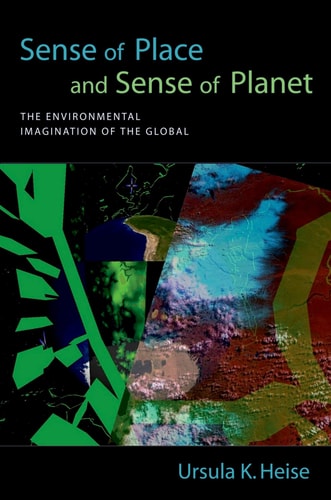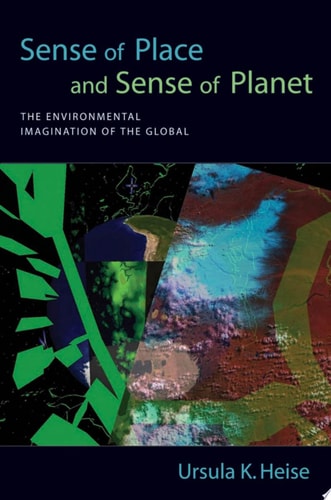
Sense Of Place And Sense Of Planet
0
0
As an Amazon Associate and affiliate partner, Menrva Books earns from qualifying purchases. Learn more
Author Description
Sense Of Place And Sense Of Planet Analyzes The Relationship Between The Imagination Of The Global And The Ethical Commitment To The Local In Environmentalist Thought And Writing From The 1960s To The Present. Part One Critically Examines The Emphasis On Local Identities And Communities In North American Environmentalism By Establishing Conceptual Connections Between Environmentalism And Ecocriticism, On One Hand, And Theories Of Globalization, Transnationalism And Cosmopolitanism, On The Other. It Proposes The Concept Of Eco-cosmopolitanism As A Shorthand For Envisioning These Connections And The Cultural And Aesthetic Forms Into Which They Translate. Part Two Focuses On Conceptualizations Of Environmental Danger And Connects Environmentalist And Ecocritical Thought With The Interdisciplinary Field Of Risk Theory In The Social Sciences, Arguing That Environmental Justice Theory And Ecocriticism Stand To Benefit From Closer Consideration Of The Theories Of Cosmopolitanism That Have Arisen In This Field From The Analysis Of Transnational Communities At Risk. Both Parts Of The Book Combine In-depth Theoretical Discussion With Detailed Analyses Of Novels, Poems, Films, Computer Software And Installation Artworks From The Us And Abroad That Translate New Connections Between Global, National And Local Forms Of Awareness Into Innovative Aesthetic Forms Combining Allegory, Epic, And Views Of The Planet As A Whole With Modernist And Postmodernist Strategies Of Fragmentation, Montage, Collage, And Zooming.
Menrva's Summary
THE THESIS
This book investigates the tension between local environmental commitment and global planetary awareness in contemporary cultural production. Ursula K. Heise, a professor of English and environmental studies, utilizes a framework of eco-cosmopolitanism to bridge the gap between environmentalist thought and theories of globalization. By analyzing diverse media from the 1960s to the present, she argues that environmental justice and ecocriticism must integrate risk theory to better understand how transnational communities perceive and respond to environmental threats.
THE SCOPE MAP
What You Will Find
- Theoretical analysis of eco-cosmopolitanism and its application to environmental literature and art.
- Examination of risk theory as a tool for understanding global environmental dangers.
- Comparative study of novels, poems, films, and digital media from the United States and international contexts.
- Exploration of aesthetic strategies including allegory, montage, and planetary-scale visualization.
THE AUTHORITY PERSPECTIVE
Scholars and critics recognize this work as a foundational text for the study of environmental humanities and global cultural theory. Readers frequently note the academic density of the prose, which effectively synthesizes complex sociological concepts with literary analysis.
Page Count:
264
Publication Date:
2008-01-01
Publisher:
Oxford University Press
ISBN-10:
0199714800
ISBN-13:
9780199714803
Globalization
Social Science
Ecocriticism
Literary Criticism