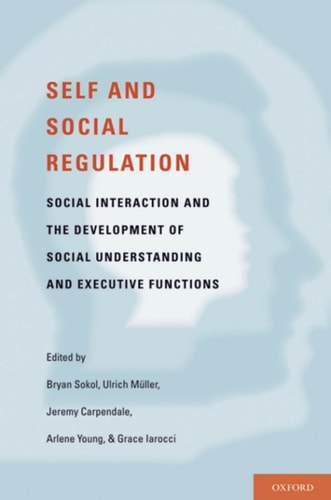
Self- and Social-Regulation: The Development of Social Interaction, Social Understanding, and Executive Functions
0
0
As an Amazon Associate and affiliate partner, Menrva Books earns from qualifying purchases. Learn more
Author Description
New research on children's executive functioning and self-regulation has begun to reveal important connections to their developing social understanding (or "theories of mind") and emotional competence. The exact nature of the relations between these aspects of children's social and emotional development is, however, far from being fully understood. Considerable disagreement has emerged, for instance, over the question of whether executive functioning facilitates social-emotional understanding, or vice versa. Recent studies linking the development of children's social understanding with aspects of their interpersonal relationships also raise concerns about the particular role that social interaction plays in the development of executive function. Three key questions currently drive this debate: Does social interaction play a role in the development of executive function or, more generally, self-regulation? If it does play a role, what forms of social interaction facilitate the development of executive function? Do different patterns of interpersonal experience differentially affect the development of self-regulation and social understanding? In this book, the contributors address these questions and explore other emerging theoretical and empirical links between self-regulation, social interaction, and children's psycho-social competence. It will be a valuable resource for student and professional researchers interested in executive function, emotion, and social development.
Menrva's Summary
THE THESIS
This book investigates the complex, bidirectional relationship between the development of executive functioning and the growth of social understanding in children. The authors, a team of expert researchers in developmental psychology, synthesize current empirical data to address whether executive functions facilitate social-emotional competence or if social interaction serves as the primary catalyst for cognitive self-regulation. By examining the interplay between interpersonal experiences and internal cognitive processes, the text provides a framework for understanding how children navigate their social environments.
THE SCOPE MAP
What You Will Find
- Analysis of the causal links between executive function and theory of mind development.
- Examination of how specific patterns of social interaction influence self-regulation.
- Synthesis of empirical studies regarding children's psycho-social competence.
- Theoretical models exploring the integration of emotional and cognitive development.
THE AUTHORITY PERSPECTIVE
Experts identify this volume as a significant contribution to developmental psychology, particularly for its focus on the intersection of cognitive and social domains. Researchers and students frequently cite the text for its rigorous synthesis of current debates in the field of child development.
Page Count:
472
Publication Date:
2010-01-01
Publisher:
Oxford University Press
ISBN-10:
0199716633
ISBN-13:
9780199716630
Psychology
Social Science
Education
Community Tags
Similar Books