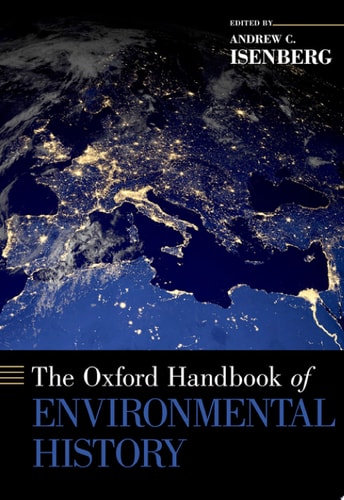
Oxford Handbook of Environmental History
0
0
As an Amazon Associate and affiliate partner, Menrva Books earns from qualifying purchases. Learn more
Author Description
The Field Of Environmental History Emerged Just Decades Ago But Has Established Itself As One Of The Most Innovative And Important New Approaches To History, One That Bridges The Human And Natural World, The Humanities And The Sciences. With The Current Trend Towards Internationalizing History, Environmental History Is Perhaps The Quintessential Approach To Studying Subjects Outside The Nation-state Model, With Pollution, Global Warming, And Other Issues Affecting The Earth Not Stopping At National Borders. With 25 Essays, This Handbook Is Global In Scope And Innovative In Organization, Looking At The Field Thematically Through Such Categories As Climate, Disease, Oceans, The Body, Energy, Consumerism, And International Relations.
Menrva's Summary
THE THESIS
This handbook investigates the methodological and thematic evolution of environmental history as a bridge between the humanities and the natural sciences. Editor Andrew C. Isenberg compiles twenty-five essays from leading scholars to define the field's current state. The text argues that environmental history provides a necessary framework for understanding global phenomena like climate change and pollution that transcend traditional nation-state boundaries.
THE SCOPE MAP
What You Will Find
- A thematic analysis of environmental history covering topics such as climate, disease, and energy.
- Methodological approaches for studying history outside the traditional nation-state model.
- Twenty-five scholarly essays examining the intersection of human activity and natural systems.
- Explorations of consumerism, the body, and international relations through an ecological lens.
THE AUTHORITY PERSPECTIVE
Experts recognize this volume as a foundational reference for students and researchers entering the field of environmental history. Readers frequently note the academic density of the prose and the comprehensive nature of the thematic essays provided.
Page Count:
800
Publication Date:
2014-01-01
Publisher:
Oxford University Press, Incorporated
ISBN-10:
0199717214
ISBN-13:
9780199717217
History
Science
Nature
Environmental History
Academic
Human ecology
Humanities
Community Tags
Similar Books