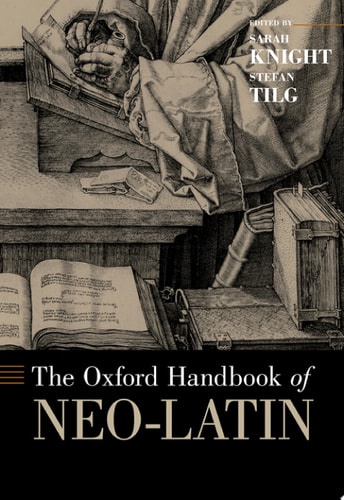
The Oxford Handbook of Neo-Latin
Author Description
From the dawn of the early modern period around 1400 until the eighteenth century, Latin was still the European language and its influence extended as far as Asia and the Americas. At the same time, the production of Latin writing exploded thanks to book printing and new literary and cultural dynamics. Latin also entered into a complex interplay with the rising vernacular languages. This Handbook gives an accessible survey of the main genres, contexts, and regions of Neo-Latin, as we have come to call Latin writing composed in the wake of Petrarch (1304-74). Its emphasis is on the period of Neo-Latin's greatest cultural relevance, from the fifteenth to the eighteenth centuries. Its chapters, written by specialists in the field, present individual methodologies and focuses while retaining an introductory character. The Handbook will be valuable to all readers wanting to orientate themselves in the immense ocean of Neo-Latin literature and culture. It will be particularly helpful for those working on early modern languages and literatures as well as to classicists working on the culture of ancient Rome, its early modern reception and the shifting characteristics of post-classical Latin language and literature. Political, social, cultural and intellectual historians will find much relevant material in the Handbook, and it will provide a rich range of material to scholars researching the history of their respective geographical areas of interest.
Menrva's Summary
THE THESIS
This volume investigates the evolution, cultural significance, and expansive reach of Neo-Latin literature from the early modern period through the eighteenth century. Edited by Sarah S. Knight and Stefan Tilg, the text compiles contributions from field specialists to provide a comprehensive framework for understanding how Latin functioned as a primary European language alongside emerging vernaculars. The authors utilize historical, literary, and cultural analysis to map the transition of Latin writing in the wake of Petrarch, emphasizing its role in intellectual and social history.
THE SCOPE MAP
What You Will Find
- Surveys of major Neo-Latin literary genres and regional variations
- Methodological approaches to studying post-classical Latin texts
- Analysis of the interplay between Latin and early modern vernacular languages
- Contextualization of Latin within the printing revolution and cultural shifts
Scope Limits
- Does not provide an exhaustive catalog of every extant Neo-Latin text
- Focuses primarily on the period from the fifteenth to the eighteenth centuries
THE AUTHORITY PERSPECTIVE
Scholars and students of early modern history and classical reception identify this work as a foundational reference for navigating the vast corpus of post-classical Latin literature. Readers frequently note the academic density of the prose, which serves as a rigorous entry point for researchers across multiple disciplines.
Page Count:
631
Publication Date:
2015-01-01
Publisher:
Oxford University Press
ISBN-10:
0190273348
ISBN-13:
9780190273347
History
Communications
English & College Success
Latin Language
Early Modern
Linguistics
Academic
Literary Criticism
English
World Languages
Reference
Community Tags
Similar Books