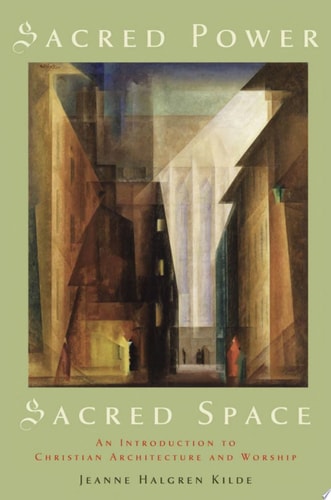
Sacred Power, Sacred Space: An Introduction to Christian Architecture and Worship
0
0
As an Amazon Associate and affiliate partner, Menrva Books earns from qualifying purchases. Learn more
Author Description
Jeanne Halgren Kilde's survey of church architecture is unlike any other. Her main concern is not the buildings themselves, but rather the dynamic character of Christianity and how church buildings shape and influence the religion. Kilde argues that a primary function of church buildings is to represent and reify three different types of power: divine power, or ideas about God; personal empowerment as manifested in the individual's perceived relationship to the divine; and social power, meaning the relationships between groups such as clergy and laity. Each type intersects with notions of Christian creed, cult, and code, and is represented spatially and materially in church buildings. Kilde explores these categories chronologically, from the early church to the twentieth century. She considers the form, organization, and use of worship rooms; the location of churches; and the interaction between churches and the wider culture. Church buildings have been integral to Christianity, and Kilde's important study sheds new light on the way they impact all aspects of the religion. Neither mere witnesses to transformations of religious thought or nor simple backgrounds for religious practice, church buildings are, in Kilde's view, dynamic participants in religious change and goldmines of information on Christianity itself.
Menrva's Summary
THE THESIS
This work investigates how the physical design and spatial organization of church buildings actively shape and reflect the evolution of Christian religious practice and power dynamics. Jeanne Halgren Kilde, a scholar of religious architecture, utilizes a historical framework to argue that church buildings are not passive structures but dynamic participants in the development of Christian theology and social hierarchy. She posits that these spaces reify three specific forms of power: divine authority, individual empowerment, and the social relationship between clergy and laity. By analyzing the intersection of creed, cult, and code, Kilde demonstrates how material environments influence the lived experience of the faith.
THE SCOPE MAP
What You Will Find
- A chronological analysis of church architecture from the early church period through the twentieth century.
- A theoretical framework for interpreting spatial design as a manifestation of divine, personal, and social power.
- Examination of the interaction between worship spaces and broader cultural contexts.
- Detailed study of the form, organization, and functional use of worship rooms across different historical eras.
THE AUTHORITY PERSPECTIVE
Scholars and students of religious history frequently cite this text as a foundational resource for understanding the intersection of material culture and theology. Readers often note the clarity of the author's analytical framework, which provides a structured approach to interpreting complex architectural history.
Page Count:
248
Publication Date:
2008-01-01
Publisher:
Oxford University Press
ISBN-10:
0199718105
ISBN-13:
9780199718108
Religion
Architecture
History
Buildings
Church Leadership
Kindle eBooks
Church Architecture
Church History
Kindle Store
Categories
Linguistics
Reference
Historical
Words Language & Grammar
Christianity
Community Tags
Similar Books