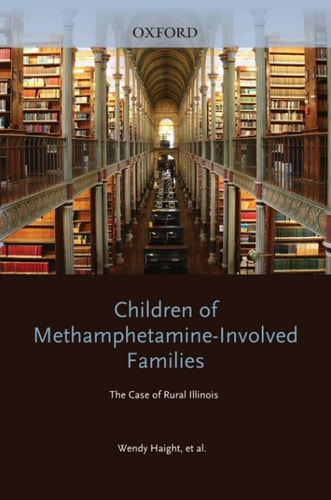
Helping Children of Rural Methamphetamine Families: The Case of Rural Illinois
0
0
As an Amazon Associate and affiliate partner, Menrva Books earns from qualifying purchases. Learn more
Author Description
Methamphetamine not only destroys the lives of those who become addicted to it, but affects all corners of society, including innocent children. This important book follows the case of rural Illinois, where in the mid-1990s methamphetamine production and misuse became a significant problem and, as a result, child welfare professionals saw an influx onto their caseloads of children whose parents were involved with the drug. The authors' account of the problems the children face, and of the efforts to help them, sheds useful light on possibilities for many other situations. Applying a case-based, mixed-methods approach that capitalizes on rich qualitative data, the book examines parental methamphetamine misuse from a sociocultural perspective. Using extensive child welfare investigation data, participant observation, and in-depth interviews, the authors describe the perilous home lives of rural children whose parents misuse methamphetamine, where they are exposed to maltreatment, criminal behavior, and environmental danger. Many children end up with significant emotional and behavioral problems, especially posttraumatic symptoms, that will stay with them for years. Based on this descriptive information and the existing clinical literature, the authors designed a relationship- and narrative-based mental health program, "Life Story Intervention," that draws on rural communities' strengths, such as their storytelling traditions. Pilot data from the program, shared here, suggests some positive results of the intervention on children's psychological functioning. Eradication of the problems caused by methamphetamine abuse will require years more of concerted effort and collaboration such as that described in this book. Social work and child welfare professors and students, researchers, practitioners, and policy-makers will find inspiration in this account of the success that can result, with this issue and others, when practitioners and researchers join forces to understand
Menrva's Summary
THE THESIS
This book investigates the systemic impact of parental methamphetamine misuse on children within rural Illinois and evaluates the efficacy of the "Life Story Intervention" program. The authors, a team of researchers and practitioners including Wendy L. Haight, utilize a mixed-methods approach to analyze the intersection of substance abuse, child welfare, and rural community dynamics. By synthesizing extensive investigation data with qualitative interviews, the text provides a framework for understanding the long-term psychological consequences of environmental danger and maltreatment on youth. The work argues that collaborative, narrative-based interventions can mitigate trauma by leveraging the inherent strengths of rural social structures.
THE SCOPE MAP
What You Will Find
- Longitudinal analysis of child welfare caseloads in rural Illinois during the mid-1990s.
- A detailed methodology for the "Life Story Intervention" mental health program.
- Qualitative data derived from participant observation and in-depth interviews with affected families.
- Examination of the sociocultural factors contributing to parental substance misuse in isolated settings.
THE AUTHORITY PERSPECTIVE
Experts in social work and child welfare identify this text as a significant contribution to the study of substance-affected families in rural environments. Practitioners frequently cite the book for its practical application of narrative-based therapy in clinical settings.
Page Count:
264
Publication Date:
2008-01-01
Publisher:
Oxford University Press
ISBN-10:
0199717001
ISBN-13:
9780199717002
Psychology
Introduction to Social WorkWelfare
Sociology
Social Work
Public Health
Child Welfare
Addiction Studies
Community Tags
Similar Books
Reader Comments
Share Your Thoughts
No comments yet. Be the first to share your thoughts!