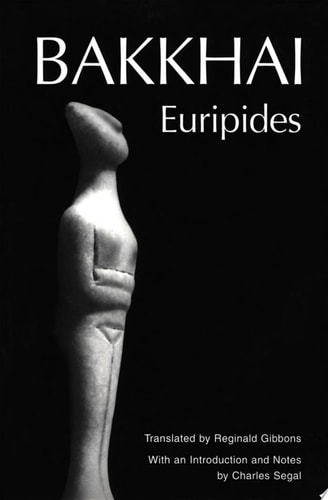
Bakkhai
0
0
As an Amazon Associate and affiliate partner, Menrva Books earns from qualifying purchases. Learn more
Author Description
Regarded By Many As Euripides' Masterpiece, Bakkhai Is A Powerful Examination Of Religious Ecstasy And The Resistance To It. A Call For Moderation, It Rejects The Temptation Of Pure Reason As Well As Pure Sensuality, And Is A Staple Of Greek Tragedy, Representing In Structure And Thematics An Exemplary Model Of The Classic Tragic Elements. Disguised As A Young Holy Man, The God Bacchus Arrives In Greece From Asia Proclaiming His Godhood And Preaching His Orgiastic Religion. He Expects To Be Embraced In Thebes, But The Theban King, Pentheus, Forbids His People To Worship Him And Tries To Have Him Arrested. Enraged, Bacchus Drives Pentheus Mad And Leads Him To The Mountains, Where Pentheus' Own Mother, Agave, And The Women Of Thebes Tear Him To Pieces In A Bacchic Frenzy. Gibbons, A Prize-winning Poet, And Segal, A Renowned Classicist, Offer A Skilled New Translation Of This Central Text Of Greek Tragedy.
Menrva's Summary
THE PULSE
The arrival of the god Dionysus in Thebes triggers a violent confrontation between divine authority and human resistance. Disguised as a mortal priest, Dionysus seeks recognition for his new cult, only to face the rigid opposition of King Pentheus, who views the ecstatic worship as a threat to civic order. The narrative unfolds through the formal conventions of Greek tragedy, utilizing a chorus to provide moral commentary while the protagonist descends into madness. As the conflict escalates, the physical and psychological boundaries between the rational state and the chaotic divine are systematically dismantled.
INSIDE THE PAGES
- Utilization of the traditional Greek chorus to frame thematic developments.
- Exploration of the duality between rational order and primal instinct.
- Use of dramatic irony as the king unknowingly confronts a deity.
- Structural adherence to the classic unities of time, place, and action.
- Incorporation of ritualistic elements reflecting ancient religious practices.
- Characterization of the antagonist as a symbol of rigid, unyielding authority.
- Depiction of divine retribution as a mechanism for narrative resolution.
- Examination of the psychological disintegration of the central monarch.
THE COLLECTIVE ECHO
Discussion often centers on the play's ambiguous stance toward both religious fervor and secular governance. Readers frequently highlight the chilling effectiveness of the final scenes, where the horror of the king's demise serves as a stark warning against hubris. Critics often analyze the structural precision of the work, noting how the pacing accelerates toward the inevitable violent climax. The text remains a primary subject for those interested in the intersection of ancient theology and human psychology. Scholars continue to debate the author's intent regarding the balance between the god's vengeance and the king's stubbornness.
Page Count:
224
Publication Date:
2001-01-01
Publisher:
Oxford University Press
ISBN-10:
0199725934
ISBN-13:
9780199725939
Classics
Drama
Greek Tragedy
Mythology
Plays