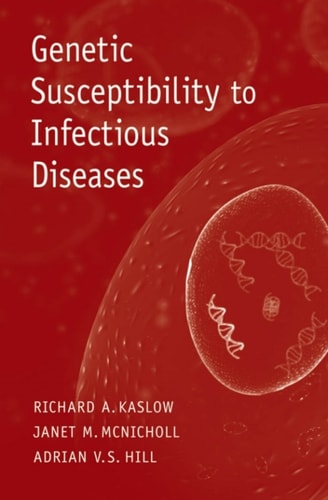
Genetic Susceptibility to Infectious Diseases
0
0
As an Amazon Associate and affiliate partner, Menrva Books earns from qualifying purchases. Learn more
Author Description
Infectious diseases are commonly regarded as a distinct category, with different causes and patterns than chronic or genetic disease. But in fact there are many varieties of genetic susceptibility to infection, the subject of this book, which will be divided into three sections: 1) concepts and methods, 2) genes and pathophysiologic mechanisms, and 3) infectious agents and diseases. No currently plubished text on either genetics or infectious diseases focuses on the genetic aspects of the special relationship between host and pathogen in the way envisioned for Section 1. No other work on the selected genes regulating immunity deals as systematically with the sequence variation/function relationships most pertinent to infection as planned for Section 2. And no other book gives as meaningful a picture of how these genes operate in infectious disease as Section 3 will.
Menrva's Summary
THE THESIS
This book investigates the complex interplay between human genetic variation and susceptibility to various infectious diseases. The authors, including Adrian V. S. Hill and Richard A. Kaslow, utilize a multidisciplinary approach to bridge the gap between clinical infectious disease study and human genetics. By examining how specific gene sequences regulate immune responses, the text provides a framework for understanding why individuals exhibit different levels of vulnerability to pathogens.
THE SCOPE MAP
What You Will Find
- Methodological concepts for identifying genetic markers in host-pathogen interactions
- Analysis of gene sequence variation and its direct impact on immune function
- Systematic review of specific infectious agents and their corresponding genetic susceptibility factors
- Clinical case studies illustrating the pathophysiologic mechanisms of host immunity
THE AUTHORITY PERSPECTIVE
Experts recognize this work as a foundational text that successfully integrates the fields of genetics and infectious disease. Readers frequently note the academic density of the prose, which serves as a comprehensive reference for researchers and clinicians in the field of immunology.
Page Count:
464
Publication Date:
2008-01-01
Publisher:
Oxford University Press
ISBN-10:
019972122X
ISBN-13:
9780199721221
Science
Medicine
Linguistics
Immunology
Allied Health
English
Communicable Diseases
English & College Success
Pathology
Medical
Genetics
Infectious Diseases
Community Tags
Similar Books