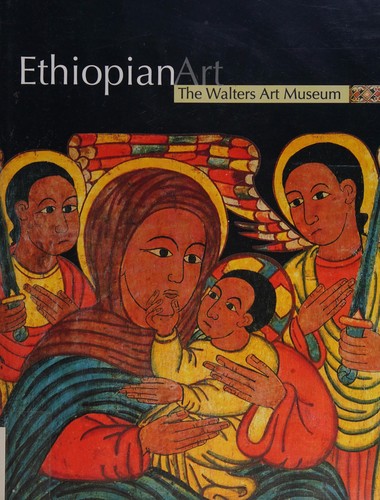
Ethiopian Art
0
0
As an Amazon Associate and affiliate partner, Menrva Books earns from qualifying purchases. Learn more
Author Description
The art of the Christian kingdom of Ethiopia is characterized by beautiful metalwork crosses, illuminated manuscripts, and painted icons that were used in the rituals of the church. Historically, Ethiopia was a Christian kingdom with strong ties in both trade and religion to the cultures located around the Mediterranean. Their Christian tradition dates back to the fourth century, when the king of the Aksumite kingdom converted to Christianity. By the fifteenth century, the African nation had developed a tradition of icon-painting that rivaled the Orthodox empires of Byzantium and Russia, as well as the famed panel painting of Renaissance Italy. Despite these influences, the craftsmen of Ethiopia created a strong artistic culture of their own that encompassed a wide range of styles while maintaining a unique vision. The collection of Ethiopian art at the Walters Art Museum is now the largest outside of Ethiopia itself. This collection is exhibited with those of Byzantium and Russia in a permanent gallery devoted to the art of the Orthodox world. This book celebrates Ethiopian art and reveals a vibrant world or color, ritual, and spirituality.
Menrva's Summary
THE THESIS
The art of the Christian kingdom of Ethiopia is characterized by beautiful metalwork crosses, illuminated manuscripts, and painted icons that were used in the rituals of the church. Historically, Ethiopia was a Christian kingdom with strong ties in both trade and religion to the cultures located around the Mediterranean, with its Christian tradition dating back to the fourth century. By the fifteenth century, the African nation had developed a tradition of icon-painting that rivaled the Orthodox empires of Byzantium and Russia, as well as the famed panel painting of Renaissance Italy. Despite these influences, the craftsmen of Ethiopia created a strong artistic culture of their own that encompassed a wide range of styles while maintaining a unique vision.
THE SCOPE MAP
- Beautiful metalwork crosses
- Illuminated manuscripts
- Painted icons used in church rituals
- Historical context of Ethiopia as a Christian kingdom with Mediterranean ties
- Development of icon-painting tradition by the 15th century
- Ethiopian artists' creation of a strong, unique artistic culture
- Celebration of Ethiopian art and its vibrant world of color, ritual, and spirituality
THE AUTHORITY PERSPECTIVE
The book celebrates Ethiopian art, highlighting its unique characteristics such as metalwork crosses, illuminated manuscripts, and painted icons. It places this art within its historical and religious context, noting Ethiopia's Christian tradition dating back to the fourth century and its development of icon-painting by the fifteenth century. The text emphasizes how Ethiopian craftsmen forged a distinct artistic culture despite influences from Byzantium, Russia, and Renaissance Italy. The collection at the Walters Art Museum, the largest outside of Ethiopia, is presented as a testament to this vibrant artistic heritage.
Page Count:
144
Publication Date:
2001-01-01
ISBN-10:
1903942020
ISBN-13:
9781903942024
History
Non-Fiction
Art
Icons
African Art
Metalwork
Manuscripts
Art History
Christian Art
Community Tags
Similar Books