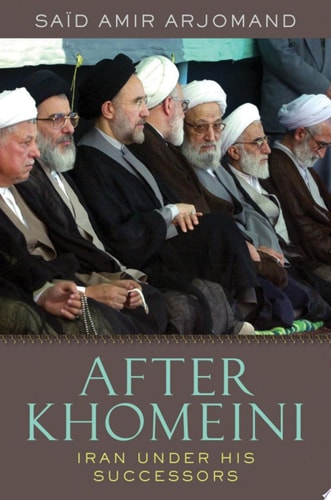
After Khomeini
0
0
As an Amazon Associate and affiliate partner, Menrva Books earns from qualifying purchases. Learn more
Author Description
For Many Americans, Iran Is Our Most Dangerous Enemy--part Of George W. Bush's Axis Of Evil Even Before The Appearance Of Ahmadinejad. But What Is The Reality? How Did Ahmadinejad Rise To Power, And How Much Power Does He Really Have? What Are The Chances Of Normalizing Relations With Iran? In After Khomeini, Sa?d Amir Arjomand Paints A Subtle And Perceptive Portrait Of Contemporary Iran. This Work, A Sequel To Arjomand's Acclaimed The Turban For The Crown, Examines Iran Under The Successors Of Ayatollah Khomeini Up To The Present Day. He Begins, As The Islamic Republic Did, With Khomeini, Offering A Brilliant Capsule Biography Of The Man Who Masterminded The Revolution That Overthrew The Shah. Arjomand Draws Clear Distinctions Between The Moderates Of The Initial Phrase Of The Revolution, Radicals, Pragmatists, And Hardliners, The Latter Best Exemplified By Mahmud Ahmadinejad. Taking A Chronological And Thematic Approach, He Traces The Emergence And Consolidation Of The Present System Of Collective Rule By Clerical Councils And The Peaceful Transition To Dual Leadership By The Ayatollah As The Supreme Guide And The Subordinate President Of The Islamic Republic Of Iran. He Explains The Internal Political Quarrels Among Khomeini's Heirs As A Struggle Over His Revolutionary Legacy. And He Outlines How The Ruling Clerical Elite And The Nation's Security Forces Are Interdependent Politically And Economically, Speculating On The Potential Future Role Of The Revolutionary Guards. Bringing The Work Up To Current Political Events, Arjomand Analyzes Iran's Foreign Policy As Well, Including The Impact Of The Fall Of Communism On Iran And Ahmadinejad's Nuclear Policy. Few Countries Loom Larger In American Foreign Relations Than Iran. In This Rich And Insightful Account, An Expert On Iranian Society And Politics Untangles The Complexities Of A Nation Still Riding The Turbulent Wake Of One Of History's Great Revolutions.
Menrva's Summary
THE THESIS
This work investigates how the Islamic Republic of Iran evolved from the revolutionary vision of Ayatollah Khomeini into the complex, factionalized system of clerical rule observed under his successors. Author Said Amir Arjomand, a recognized expert on Iranian society and politics, utilizes a blend of historical analysis and political science frameworks to evaluate the power dynamics within the Iranian state. He examines the transition from Khomeini's singular authority to the dual leadership model involving the Supreme Guide and the President. By analyzing the internal struggles between moderates, pragmatists, and hardliners, Arjomand provides a structured account of how the revolutionary legacy has been contested and consolidated over several decades.
THE SCOPE MAP
What You Will Find
- A detailed chronological analysis of Iranian political evolution from the 1979 revolution through the presidency of Mahmud Ahmadinejad.
- An examination of the institutional interdependence between the ruling clerical elite and the nation's security forces.
- A thematic breakdown of Iran's foreign policy, specifically addressing the impact of the collapse of communism and nuclear policy.
- A biographical assessment of Ayatollah Khomeini's role in establishing the foundational structures of the Islamic Republic.
THE AUTHORITY PERSPECTIVE
Experts and scholars of Middle Eastern studies recognize this text as a vital resource for understanding the internal mechanisms of the Iranian government. Readers frequently note the academic density of the prose, which provides a rigorous, non-partisan examination of a nation often misunderstood in Western political discourse.
Page Count:
280
Publication Date:
2009-01-01
Publisher:
Oxford University Press
ISBN-10:
0199739552
ISBN-13:
9780199739554
Biography
History
Middle East
International relations
Community Tags
Similar Books