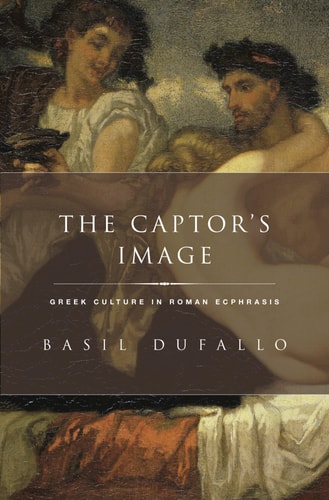
The Captor's Image: Greek Culture in Roman Ecphrasis
0
0
As an Amazon Associate and affiliate partner, Menrva Books earns from qualifying purchases. Learn more
Author Description
An influential view of ecphrasis--the literary description of art objects--chiefly treats it as a way for authors to write about their own texts without appearing to do so, and even insist upon the aesthetic dominance of the literary text over the visual image. However, when considering its use in ancient Roman literature, this interpretation proves insufficient. The Captor's Image argues for the need to see Roman ecphrasis, with its prevalent focus on Hellenic images, as a site of subtle, ongoing competition between Greek and Roman cultures. Through close readings of ecphrases in a wide range of Latin authors--from Plautus, Catullus, and Horace to Vergil, Ovid, and Martial, among others--Dufallo contends that Roman ecphrasis reveals an ambivalent receptivity to Greek culture, an attitude with implications for the shifting notions of Roman identity in the Republican and Imperial periods. Individual chapters explore how the simple assumption of a self-asserting ecphrastic text is called into question by comic performance, intentionally inconsistent narrative, satire, Greek religious iconography, the contradictory associations of epic imagery, and the author's subjection to a patron. Visual material such as wall painting, statuary, and drinkware vividly contextualizes the discussion. As the first book-length treatment of artistic ecphrasis at Rome, The Captor's Image resituates a major literary trope within its hybrid cultural context while advancing the idea of ecphrasis as a cultural practice through which the Romans sought to redefine their identity with, and against, Greekness.
Menrva's Summary
THE THESIS
This book investigates how the literary device of ecphrasis in ancient Roman texts functioned as a mechanism for negotiating cultural identity in relation to Greek influence. Basil Dufallo, a scholar of Latin literature, challenges the traditional view that ecphrasis serves merely as a self-referential literary trope. Instead, he argues that Roman authors utilized descriptions of Greek art to navigate a complex, competitive, and often ambivalent relationship with Hellenic culture during the Republican and Imperial eras.
THE SCOPE MAP
What You Will Find
- Analysis of Latin authors including Plautus, Catullus, Horace, Vergil, Ovid, and Martial.
- Examination of diverse media such as wall paintings, statuary, and drinkware.
- Exploration of thematic intersections between literary narrative and religious iconography.
- A framework for understanding Roman identity formation through the lens of cultural hybridity.
THE AUTHORITY PERSPECTIVE
Scholars recognize this work as a foundational study that shifts the focus of ecphrasis from purely aesthetic analysis to a broader cultural and historical context. Readers frequently note the academic density of the prose, which provides a rigorous examination of how Roman writers engaged with the visual legacy of their Greek predecessors.
Page Count:
304
Publication Date:
2013-02-22
Publisher:
Oxford University Press
ISBN-10:
0199735875
ISBN-13:
9780199735877
History
Art Greek
Art History
Literary Criticism
Criticism history
Authors Latin
Community Tags
Similar Books