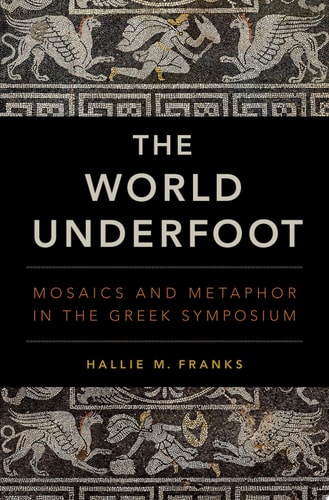
The World Underfoot: Mosaics and Metaphor in the Greek Symposium
0
0
As an Amazon Associate and affiliate partner, Menrva Books earns from qualifying purchases. Learn more
Author Description
In the Greek Classical period, the symposium--the social gathering at which male citizens gathered to drink wine and engage in conversation--was held in a room called the andron. From couches set up around the perimeter, symposiasts looked inward to the room's center, which often was decorated with a pebble mosaic floor. These mosaics provided visual treats for the guests, presenting them with images of mythological scenes, exotic flora, dangerous beasts, hunting parties, or the spectre of Dionysos: the god of wine, riding in his chariot or on the back of a panther. In The World Underfoot, Hallie M. Franks takes as her subject these mosaics and the context of their viewing. Relying on discourses in the sociology and anthropology of space, she presents an innovative new interpretation of the mosaic imagery as an active contributor to the symposium as a metaphorical experience. Franks argues that the images on mosaic floors, combined with the ritualized circling of the wine cup and the physiological reaction to wine during the symposium, would have called to mind other images, spaces, or experiences, and in doing so, prompted drinkers to reimagine the symposium as another kind of event--a nautical voyage, a journey to a foreign land, the circling heavens or a choral dance, or the luxury of an abundant past. Such spatial metaphors helped to forge the intimate bonds of friendship that are the ideal result of the symposium and that make up the political and social fabric of the Greek polis.
Menrva's Summary
THE THESIS
How did the physical environment of the Greek andron, specifically its mosaic floors, function as a catalyst for the social and metaphorical experiences of the symposium? Hallie M. Franks, a scholar of classical art and archaeology, utilizes a multidisciplinary framework combining sociology, anthropology, and spatial theory to analyze these decorative elements. She argues that these mosaics were not merely aesthetic additions but active participants in the ritualized drinking culture, shaping the participants' perception of their social gathering.
THE SCOPE MAP
What You Will Find
- Analysis of pebble mosaic iconography including mythological scenes, flora, and fauna.
- Application of spatial theory to the architecture of the andron.
- Examination of the intersection between physiological effects of wine and visual stimuli.
Scope Limits
- The study focuses primarily on the Classical period and does not extend to later Roman mosaic traditions.
- The analysis is limited to the specific social context of the male-only symposium.
THE AUTHORITY PERSPECTIVE
Scholars recognize this work as a sophisticated integration of art history and social theory, providing a fresh lens on the function of domestic space in ancient Greece. Readers frequently note the academic density of the prose, which is best suited for those with a background in classical archaeology or architectural history.
Page Count:
219
Publication Date:
2018-01-01
Publisher:
Oxford University Press
ISBN-10:
0190863188
ISBN-13:
9780190863180
Religion
History
Archaeology
Art Greek
Art And Society
Anthropology
Ancient History
Sociology
Art History
Community Tags
Similar Books