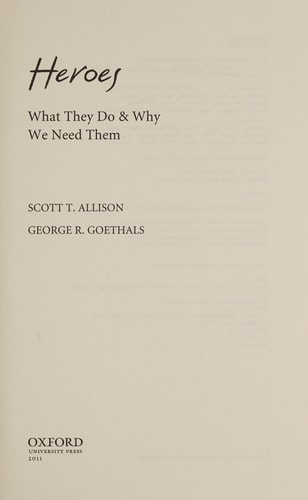
Heroes: What They Do and Why We Need Them
0
0
As an Amazon Associate and affiliate partner, Menrva Books earns from qualifying purchases. Learn more
Author Description
Abraham Lincoln, Princess Diana, Rick in Casablanca--why do we perceive certain people as heroes? What qualities do we see in them? What must they do to win our admiration? In Heroes, Scott T. Allison and George R. Goethals offer a stimulating tour of the psychology of heroism, shedding light on what heroism and villainy mean to most people and why heroes--both real people and fictional characters--are so vital to our lives. The book discusses a broad range of heroes, including Eleanor Roosevelt, Walt Kowalski in Gran Torino, Senator Ted Kennedy, and explorer Ernest Shackleton, plus villains such as Shakespeare's Iago. The authors highlight the Great Eight traits of heroes (smart, strong, selfless, caring, charismatic, resilient, reliable, and inspiring) and outline the mental models that we have of how people become heroes, from the underdog who defies great odds (David vs. Goliath) to the heroes who redeem themselves or who overcome adversity. Brimming with psychological insight, Heroes provides an illuminating look at heroes--and into our own minds as well.
Menrva's Summary
THE THESIS
This book investigates the psychological mechanisms and social constructs that lead individuals to perceive specific figures as heroes. Authors George R. Goethals and Scott T. Allison, both experts in leadership and social psychology, synthesize research on human perception to explain why society elevates certain real-world figures and fictional characters to heroic status. They argue that heroism is not merely an act but a cognitive framework shaped by our need for inspiration, guidance, and moral clarity in the face of adversity.
THE SCOPE MAP
What You Will Find
- The Great Eight traits framework: smart, strong, selfless, caring, charismatic, resilient, reliable, and inspiring.
- Analysis of diverse archetypes ranging from historical figures like Abraham Lincoln to fictional characters like Walt Kowalski.
- Psychological models explaining the perception of heroism, including the underdog narrative and the redemption arc.
- Comparative study of heroism versus villainy, utilizing examples such as Shakespeare's Iago to define moral boundaries.
THE AUTHORITY PERSPECTIVE
Experts and readers alike value this work for its accessible synthesis of complex psychological theories regarding social perception and leadership. The text is frequently cited as a foundational resource for understanding the cognitive biases and cultural needs that drive the human tendency to idolize specific individuals.
Page Count:
240
Publication Date:
2010-10-29
Publisher:
Oxford University Press
ISBN-10:
0199739749
ISBN-13:
9780199739745
Non-Fiction
Psychology
Conduct Of Life
Sociology
Social Science
Leadership
Courage
Altruism
Community Tags
Similar Books