Xiongnu: The World's First Nomadic Empire
0
0
As an Amazon Associate and affiliate partner, Menrva Books earns from qualifying purchases. Learn more
Author Description
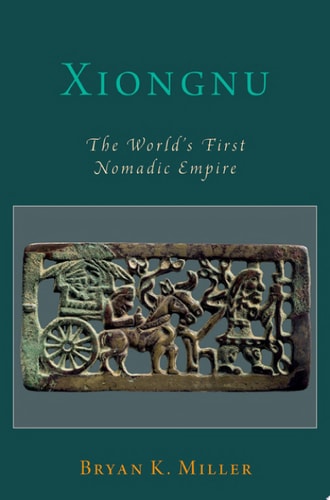
This book raises the case of the world's first nomadic empire, the Xiongnu, as a prime example of the sophisticated developments and powerful influence of nomadic regimes. Launching from a reconceptualization of the social and economic institutions of mobile pastoralists, the collective chapters trace the course of the Xiongnu Empire from before its initial rise, traversing the wars that challenged it and the reformations that made it stronger, to the legacy left after its eventual fall.Xiongnu expounds the economic practices and social conventions of steppe herders as fertile foundations for institutions and infrastructure of empire, and renders a model of “empires of mobilities,” which engaged the control less of towns and territories and more of the movements of communities and capital to fuel their regimes. By weaving together archaeological examinations with historical investigations, Bryan K. Miller presents a more complex and nuanced narrative of how an empire based firmly in the steppe over two thousand years ago managed to formulate a robust political economy and a complex political matrix that capitalized on mobilities and alternative forms of political participation, and allowed the Xiongnu to dominate vast realms of central Eurasia and leave lasting geopolitical effects on the many worlds around them.
Menrva's Summary
THE THESIS
This book investigates how the Xiongnu, as the world's first nomadic empire, established a sophisticated and robust political economy based on mobility rather than sedentary territorial control. Bryan K. Miller, an expert in the archaeology of the Eurasian steppe, synthesizes archaeological data and historical records to challenge traditional perceptions of nomadic societies. He argues that the Xiongnu utilized unique social and economic institutions to manage capital and human movement, creating a complex political matrix that dominated Central Eurasia for centuries.
THE SCOPE MAP
What You Will Find
- Analysis of the rise, reformation, and eventual decline of the Xiongnu Empire
- Theoretical framework of "empires of mobilities" as a model for nomadic governance
- Integration of archaeological findings with textual historical evidence
Scope Limits
- Does not provide a comprehensive military history of every individual conflict
- Does not focus on the internal daily lives of non-elite pastoralists beyond their economic function
THE AUTHORITY PERSPECTIVE
Scholars and historians recognize this work as a significant contribution to the study of early empires and nomadic political structures. Readers frequently note the academic density of the prose, which serves as a rigorous examination of steppe statecraft for students and researchers of ancient history.
Page Count:
384
Publication Date:
2024-01-01
Publisher:
Oxford University Press
ISBN-10:
0190083697
ISBN-13:
9780190083694
History
Archaeology
Asian History
Asia
Nomadic Studies
Community Tags
Similar Books