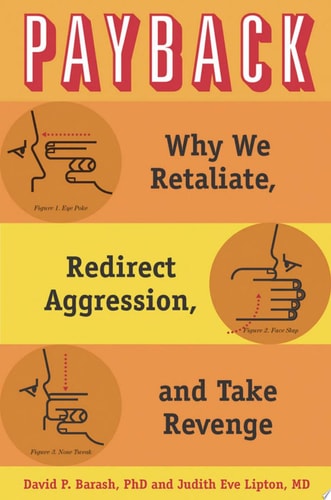
Payback
0
0
As an Amazon Associate and affiliate partner, Menrva Books earns from qualifying purchases. Learn more
Author Description
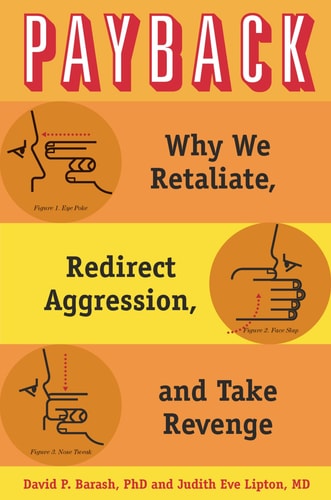
From The Child Taunted By Her Playmates To The Office Worker Who Feels Stifled In His Daily Routine, People Frequently Take Out Their Pain And Anger On Others, Even Those Who Had Nothing To Do With The Original Stress. The Bullied Child May Kick Her Puppy, The Stifled Worker Yells At His Children: Payback Can Be Directed Anywhere, Sometimes At Inanimate Things, Animals, Or Other People. In Payback, The Husband-and Wife Team Of Evolutionary Biologist David Barash And Psychiatrist Judith Lipton Offer An Illuminating Look At This Phenomenon, Showing How It Has Evolved, Why It Occurs, And What We Can Do About It. Retaliation And Revenge Are Well Known To Most People. We All Know What It Is Like To Want To Get Even, Get Justice, Or Take Revenge. What Is New In This Book Is An Extended Discussion Of Redirected Aggression, Which Occurs Not Only In People But Other Species As Well. The Authors Reveal That It's Not Just A Matter Of Yelling At Your Spouse Because Your Boss Yells At You. Indeed, The Phenomenon Of Redirected Aggression--so-called To Differentiate It From Retaliation And Revenge, The Other Main Forms Of Payback--haunts Our Criminal Courts, Our Streets, Our Battlefields, Our Homes, And Our Hearts. It Lurks Behind Some Of The Nastiest And Seemingly Inexplicable Things That Otherwise Decent People Do, From Road Rage To Yelling At A Crying Baby. And It Exists Across Boundaries Of Every Kind--culture, Time, Geography, And Even Species. Indeed, It's Not Just A Human Phenomenon. Passing Pain To Others Can Be Seen In Birds And Horses, Fish And Primates--in Virtually All Vertebrates. It Turns Out That There Is Robust Neurobiological Hardware And Software Promoting Redirected Aggression, As Well As Evolutionary Underpinnings. Payback May Be Natural, The Authors Conclude, But We Are Capable Of Rising Above It, Without Sacrificing Self-esteem And Social Status. They Show How The Various Human Responses To Pain And Suffering Can Be Managed--mindfully, Carefully, And Humanely
Menrva's Summary
THE THESIS
This book investigates the evolutionary origins and psychological mechanisms behind redirected aggression, a phenomenon where individuals displace pain and anger onto innocent third parties. The authors, an evolutionary biologist and a psychiatrist, synthesize biological data with clinical observations to explain why this behavior persists across species. They argue that while redirected aggression is rooted in neurobiological hardware and evolutionary survival strategies, humans possess the cognitive capacity to recognize and mitigate these impulses through mindful intervention.
THE SCOPE MAP
What You Will Find
- Comparative analysis of redirected aggression across vertebrate species including birds, horses, and primates.
- Examination of the neurobiological and evolutionary underpinnings of displaced anger.
- Case studies ranging from domestic settings and road rage to criminal behavior and battlefield conduct.
- Practical strategies for managing and overcoming reflexive retaliatory impulses in daily life.
THE AUTHORITY PERSPECTIVE
Experts and readers frequently note the accessible synthesis of biological theory and psychological practice in this work. The text is recognized for providing a clear, interdisciplinary framework that helps laypeople understand complex behavioral patterns in both human and animal contexts.
Page Count:
224
Publication Date:
2011-01-01
Publisher:
Oxford University Press
ISBN-10:
0199753210
ISBN-13:
9780199753215
Psychology
Non-Fiction
Behavioral Science
Sociology
Evolutionary Biology
Community Tags
Similar Books