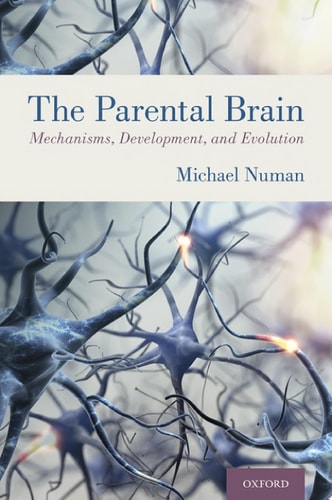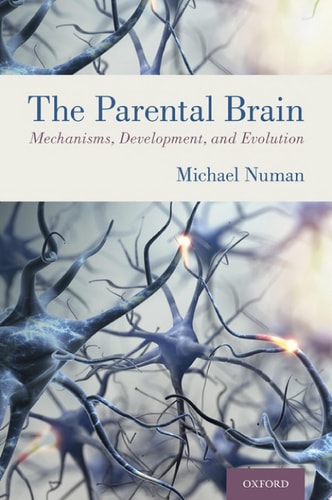
The Parental Brain: Mechanisms, Development, and Evolution
0
0
As an Amazon Associate and affiliate partner, Menrva Books earns from qualifying purchases. Learn more
Author Description
The Parental Brain: Mechanisms, Development, and Evolution presents a comprehensive analysis of how the brain regulates parental behavior in nonhuman animals and in humans, how these brain mechanisms develop, and how such development can go awry, leading to faulty parental behavior. Further, the proposal is examined that the maternal brain served as a foundation or template for the evolution of other types of strong prosocial bonds in mammals, such as the hyper-prosociality that occurs in humans. Unique aspects of this book are its multilevel perspective and the integration and comparison of animal and human research in order to create a complete understanding of the parental brain.Topics covered include the following:· Maternal, paternal, and alloparental behavior· Hormonal regulation of parental behavior· Oxytocin and parental behavior· Subcortical neural circuits regulating parental behavior in nonhuman mammals· The interactions between cortical and subcortical neural circuits that are associated with parental cognitions, emotions, and behavior in humans· How maternal care directed toward one's infants influences the development of the parental brain in the affected infants· The intergenerational transmission or continuity of normal and abnormal maternal behavior· The involvement of epigenetics and gene by environment interactions in the development of the parental brain· Evolutionary perspectives on the parental brain, particularly with respect to alloparenting and cooperative breeding that have provided a framework for appreciating how the parental brain could have provided a foundation for the hyper-prosociality that occurs within human social groupsThis book will be a valuable resource for behavioral neuroscientists and neuroendocrinologists, social neuroscientists, developmental psychobiologists and psychologists, anthropologists, and evolutionary psychologists with an interest in parental behavior, mother-infant relationships, child development, and the evo
Menrva's Summary
THE THESIS
This book investigates the biological, neural, and evolutionary mechanisms that regulate parental behavior across species, including humans. Michael Numan, a researcher in behavioral neuroscience, synthesizes data from animal models and human clinical studies to construct a framework for understanding how parental care is initiated, maintained, and transmitted across generations. The text argues that the maternal brain serves as a foundational template for the development of broader prosocial behaviors in mammals.
THE SCOPE MAP
What You Will Find
- Analysis of hormonal regulation, including the role of oxytocin in parental care.
- Examination of subcortical and cortical neural circuits involved in parental cognition and emotion.
- Discussion of epigenetic factors and gene-environment interactions in behavioral development.
- Evolutionary theories regarding alloparenting and cooperative breeding.
Scope Limits
- The text focuses primarily on biological and neuroscientific mechanisms rather than sociological or cultural parenting practices.
- It does not provide clinical therapeutic interventions for human parenting disorders.
THE AUTHORITY PERSPECTIVE
Experts recognize this work as a comprehensive synthesis that bridges the gap between animal neurobiology and human social psychology. Readers frequently note the academic density of the prose, which is tailored for researchers and advanced students in the behavioral sciences.
Page Count:
513
Publication Date:
2020-01-01
Publisher:
Oxford University Press
ISBN-10:
0190848693
ISBN-13:
9780190848699
Psychology
Family & Consumer Sciences
Neuroscience
Medical
Developmental Biology
Behavioral Science
Evolutionary Biology
Allied Health
Parenting
Developmental Psychology
Community Tags
Similar Books