The Quest for a Fusion Energy Reactor: An Insider's Account of the INTOR Workshop
0
0
As an Amazon Associate and affiliate partner, Menrva Books earns from qualifying purchases. Learn more
Author Description
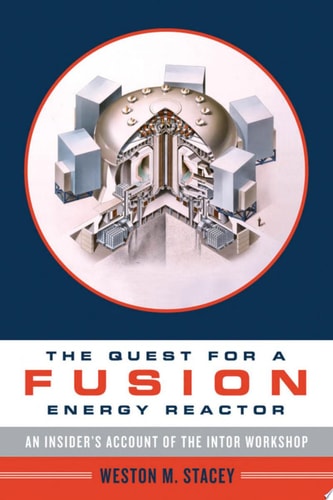
At The Geneva Superpower Summit In November 1985, Secretary Of The Former Soviet Union Mikhail Gorbachev And Us President Ronald Regan Agreed To Pursue An International Effort To Develop Fusion Energy For Peaceful Purposes. At A Time When Tension Between These Cold War Nations Was Very High, How Were These Leaders Able To Come Together To Work Towards Making Nuclear Fusion A Feasible Energy Source? The Quest For A Fusion Energy Reactor Is The Story Of The Intor Workshop (international Tokamak Reactor) Which Brought Together Scientists And Engineers From Europe, Japan, The United States, And The (then) Ussr From 1978 To 1988 To Share Their Individual Research And Work Cooperatively On The Design And Development Possibilities For Harnessing Nuclear Energy. Drawing On His Insights While Serving As Vice Chairman Of The Intor Workshop, Weston Stacey Offers An Insider's Account Of Both The Participants' Technical Work And Their Fascinating Political Interactions Under The Blanket Of The Cold War. An Accessible Presentation Of Their Research On The Viability Of Designing, Constructing, And Operating A Tokamak Experimental Power Reactor Is Combined With Personal Anecdotes Of The Obstacles Workshop Leaders And Participants Faced As They Strove To Make Progress On The Global Future Of Nuclear Fusion Technology While Balancing Their Own Countries' Priorities. The Workshop Led To The International Thermonuclear Experimental Reactor (iter), Construction Of Which Began In 2009 With The Goal Of Demonstrating The Scientific And Technical Feasibility Of Fusion Power.
Menrva's Summary
THE THESIS
This book investigates how international scientific cooperation was achieved during the height of the Cold War to pursue the development of fusion energy. Weston M. Stacey, who served as Vice Chairman of the INTOR Workshop, utilizes his firsthand experience and technical expertise to document the collaborative efforts between the United States, Europe, Japan, and the Soviet Union. The text provides a detailed framework for understanding the intersection of complex nuclear engineering and the delicate geopolitical maneuvering required to sustain a decade-long international research project.
THE SCOPE MAP
What You Will Find
- A comprehensive history of the INTOR Workshop from 1978 to 1988.
- Technical analysis regarding the design and operational viability of Tokamak experimental power reactors.
- Primary source insights into the political negotiations and personal interactions between international scientists.
- The historical trajectory leading from the INTOR Workshop to the establishment of the ITER project.
THE AUTHORITY PERSPECTIVE
Experts and historians of science recognize this work as a significant primary account of international scientific diplomacy during the late Cold War era. Readers frequently note that the book successfully balances high-level technical discussions with the human elements of cross-border collaboration.
Page Count:
208
Publication Date:
2010-01-01
Publisher:
Oxford University Press
ISBN-10:
0199750882
ISBN-13:
9780199750887
History
Science
Nuclear Physics
Kindle eBooks
Technology
Cold War
Engineering
Categories
Energy Production & Extraction
Dynamics
Kindle Store
Philosophy history
Energy policy
Community Tags
Similar Books