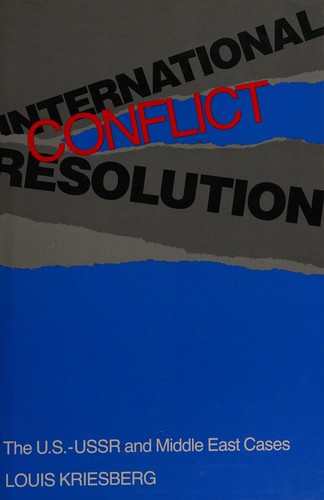
International Conflict Resolution
0
0
As an Amazon Associate and affiliate partner, Menrva Books earns from qualifying purchases. Learn more
Author Description
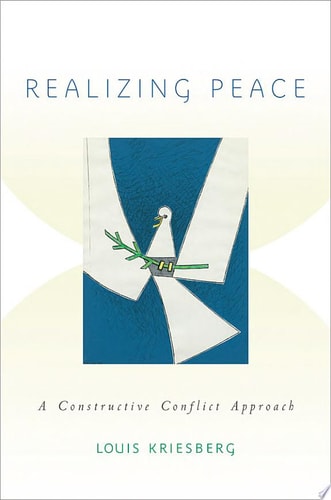
As the cold war comes to an end, world attention focuses even more on tensions in the Middle East. This timely and important book examines both the U.S.-USSR and Arab-Israeli conflicts since 1948 and uses the history of their negotiations--one successful, the other less so--to establish principles that will be helpful in resolving international conflicts now and in the future. Written by an authority on conflict resolution, the book is the first to emphasize the entire process of peacemaking instead of just one of its aspects. Examining the many de-escalation efforts in the U.S.-USSR and Arab-Israeli conflicts, Louis Kriesberg analyzes why initiatives are taken, why some initiatives are followed by negotiations and others are not, why some negotiations conclude in explicit agreements and others do not, and why some agreements become the basis for additional peacemaking moves and others do not even endure. Applying insights from theories of conflict resolution and international relations, Kriesberg builds and tests a general theory of the process of conflict termination, deepening our understanding of specific efforts toward peacemaking and drawing inferences about de-escalation strategies for policy making. In an epilogue, Kriesberg discusses the war in the Persian Gulf and shows how its resolution illustrates the relevance of the insights he provides.
Menrva's Summary
THE THESIS
This book investigates the principles and processes of international conflict resolution by examining historical case studies. Louis Kriesberg, an authority in the field, analyzes the U.S.-Soviet and Arab-Israeli conflicts since 1948, focusing on the successes and failures of their negotiations. The book explores why de-escalation initiatives are undertaken, why some lead to negotiations while others do not, and why agreements are sometimes enduring and sometimes not. It applies theories of conflict resolution and international relations to build and test a general theory of conflict termination, offering insights for policy-making.
THE SCOPE MAP
- Analysis of U.S.-USSR conflicts and negotiations since 1948.
- Examination of Arab-Israeli conflicts and their negotiation histories.
- Principles for resolving international conflicts derived from case studies.
- Analysis of the entire peacemaking process, not just isolated aspects.
- Factors influencing the initiation and success of de-escalation efforts.
- Testing of a general theory of conflict termination.
- Application of insights from conflict resolution and international relations theories.
- Epilogue discussing the Persian Gulf War as an illustration of conflict resolution principles.
THE AUTHORITY PERSPECTIVE
This book is regarded as a significant contribution to the study of conflict resolution, particularly for its comprehensive approach to peacemaking processes. The author's extensive analysis of major international conflicts, such as the U.S.-Soviet and Arab-Israeli disputes, provides a robust empirical basis for theoretical development. Its focus on the entire arc of conflict termination, from de-escalation to enduring agreements, offers practical insights for policymakers. The inclusion of contemporary events, like the Persian Gulf War, further underscores its relevance and applicability.
Page Count:
275
Publication Date:
1992-01-01
ISBN-10:
0300051751
ISBN-13:
9780300051759
Non-Fiction
History
Politics
Conflict Resolution
International relations
Community Tags
Similar Books