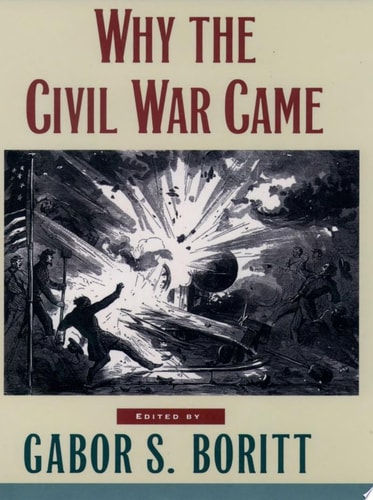
Why the Civil War Came
0
0
As an Amazon Associate and affiliate partner, Menrva Books earns from qualifying purchases. Learn more
Author Description
In The Early Morning Of April 12, 1861, Captain George S. James Ordered The Bombardment Of Fort Sumter, Beginning A War That Would Last Four Horrific Years And Claim A Staggering Number Of Lives. Since That Fateful Day, The Debate Over The Causes Of The American Civil War Has Never Ceased. What Events Were Instrumental In Bringing It About? How Did Individuals And Institutions Function? What Did Northerners And Southerners Believe In The Decades Of Strife Preceding The War? What Steps Did They Take To Avoid War? Indeed, Was The Great Armed Conflict Avoidable At All? Why The Civil War Came Brings A Talented Chorus Of Voices Together To Recapture The Feel Of A Very Different Time And Place, Helping The Reader To Grasp More Fully The Commencement Of Our Bloodiest War. From William W. Freehling's Discussion Of The Peculiarities Of North American Slavery To Charles Royster's Disturbing Piece On The Combatants' Savage Readiness To Fight, The Contributors Bring To Life The Climate Of A Country On The Brink Of Disaster. Mark Summers, For Instance, Depicts The Tragically Jubilant First Weeks Of Northern Recruitment, When Americans On Both Sides Were As Yet Unaware Of The Hellish Slaughter That Awaited Them. Glenna Matthews Underscores The Important War-catalyzing Role Played By Extraordinary Public Women, Who Proved That Neither Side Of The Mason-dixon Line Was As Patriarchal As Is Thought. David Blight Reveals An African-american World That Knew What Time It Was, And Welcomed War. And Gabor Boritt Examines The Struggle's Central Figure, Lincoln Himself, Illuminating In The Years Leading Up To The War A Blindness On The Future President's Part, An Unwillingness To Confront The Looming Calamity That Was About To Smash The Nation Asunder. William E. Gienapp Notes Perhaps The Most Unsettling Fact About The Civil War, That Democratic Institutions Could Not Resolve The Slavery Issue Without Resorting To Violence On An Epic Scale. With Gripping Detail, Why The Civil War Came Takes
Menrva's Summary
THE THESIS
This collection of essays investigates the complex political, social, and institutional failures that rendered the American Civil War an inevitability rather than an avoidable conflict. Editor Gabor S. Boritt, a noted Lincoln scholar, curates a series of contributions from prominent historians to analyze the climate of the United States in the decades preceding 1861. By examining the intersection of slavery, democratic institutional failure, and individual leadership, the text argues that the war was the result of deep-seated structural tensions that could no longer be contained by political compromise.
THE SCOPE MAP
What You Will Find
- Analysis of the role of slavery and its peculiarities in North American society.
- Examination of the failure of democratic institutions to resolve sectional disputes without violence.
- Perspectives on the social climate, including the roles of women and the African American experience.
- Case studies on the psychological readiness for combat and the leadership failures of Abraham Lincoln.
THE AUTHORITY PERSPECTIVE
Historians and students of the Civil War era frequently cite this work as a valuable synthesis of diverse scholarly viewpoints regarding the origins of the conflict. The text is noted for its accessible yet rigorous approach, making it a useful resource for those seeking to understand the multifaceted nature of the pre-war period.
Page Count:
272
Publication Date:
1996-01-01
Publisher:
Oxford University Press, Incorporated
ISBN-10:
0199761744
ISBN-13:
9780199761746
History
Military History
19th Century
Political History
Community Tags
Other Editions(2)

Similar Books



Reader Comments
Share Your Thoughts
No comments yet. Be the first to share your thoughts!