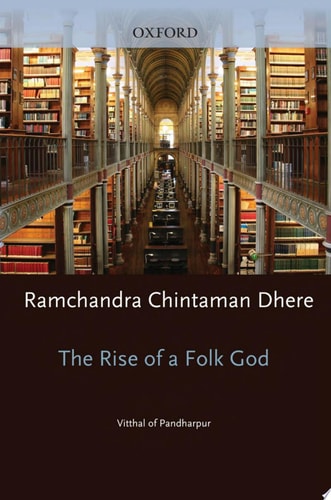
Rise of a Folk God: Vitthal of Pandharpur
0
0
As an Amazon Associate and affiliate partner, Menrva Books earns from qualifying purchases. Learn more
Author Description
Vitthal, also called Vithoba, is the most popular Hindu god in the western Indian state of Maharashtra, and the best-known god of that region outside India. His temple at Pandharpur is the goal of an annual pilgrimage that is one of the largest and most elaborate in the world. This book is the foremost study of the history of Vitthal, his worship, and his worshippers. First published in Marathi in 1984, the book remains the most thorough and insightful work on Vitthal and his cult in any language, and provides an exemplary model for understanding the history and morphology of lived Hinduism. The author, Ramchandra Chintaman Dhere, is the leading scholar of religious traditions in Maharashtra and throughout the Deccan, the plateau that covers most of central India.Vitthal exemplifies the synthesis of Vaishnava and Shaiva elements that not only typifies Maharashtrian Hindu religious life but also marks Vitthal's resemblance to another prominent South Indian god, Venkatesh of Tirupati in Andhra Pradesh. Dhere's analysis highlights Vitthal's connection with pastoralist hero cults, and demonstrates the god's development from a god of shepherds to a god of the majority of the population. In addition, Dhere also explores the connections of Vitthal with Buddhist and Jain traditions. In the book's final chapter, Dhere presents a culminating stage in the evolution of the worship of Vitthal: the interpretation in spiritual terms of the god, his temple, the town of Pandharpur, and the river that flows past the town. Dhere received India's highest literary award, the Sahitya Akademi prize, for this book.
Menrva's Summary
THE THESIS
How did the deity Vitthal evolve from a regional pastoralist figure into the central focus of one of the world's most significant religious pilgrimages? Ramchandra Chintaman Dhere, a preeminent scholar of Maharashtrian religious traditions, utilizes extensive historical, linguistic, and ethnographic research to trace the morphology of the Vitthal cult. He argues that the god represents a complex synthesis of Vaishnava, Shaiva, Buddhist, and Jain influences, reflecting the broader evolution of lived Hinduism in the Deccan region.
THE SCOPE MAP
What You Will Find
- Historical analysis of the transition from pastoralist hero cults to mainstream Hindu worship.
- Comparative study of Vitthal's iconography and ritual practices alongside Venkatesh of Tirupati.
- Examination of the syncretic religious landscape of Maharashtra, including Buddhist and Jain intersections.
- Detailed exploration of the spiritual symbolism inherent in the Pandharpur pilgrimage and the Chandrabhaga river.
THE AUTHORITY PERSPECTIVE
Experts recognize this work as the definitive academic study on the Vitthal cult, frequently citing its depth and methodological rigor. Scholars highlight the text as a foundational resource for understanding the religious history of the Deccan plateau and the development of regional Hindu traditions.
Page Count:
370
Publication Date:
2011-10-10
Publisher:
Oxford University Press
ISBN-10:
0199777594
ISBN-13:
9780199777594
Religion
History
Hinduism
Social Life
Mythology
Community Tags
Similar Books