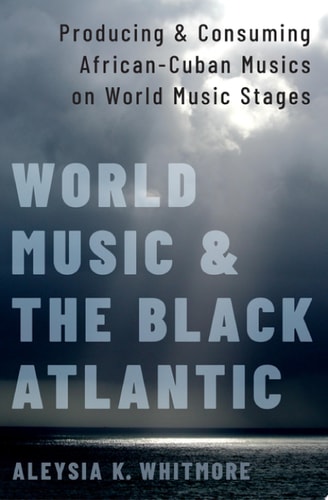
World Music and the Black Atlantic: Producing and Consuming African-Cuban Musics on World Music Stages
0
0
As an Amazon Associate and affiliate partner, Menrva Books earns from qualifying purchases. Learn more
Author Description
In the mid-20th century, African musicians took up Cuban music as their own and claimed it as a marker of black Atlantic connections and of cosmopolitanism untethered from European colonial relations. Today, Cuban/African bands popular in Africa in the 1960s and '70s have moved into the world music scene in Europe and North America, and world music producers and musicians have created new West African-Latin American collaborations expressly for this market niche. World Music and the Black Atlantic follows two of these bands, Orchestra Baobab and AfroCubism, and the industry and audiences that surround them-from musicians' homes in West Africa, to performances in Europe and North America, to record label offices in London. World Music and the Black Atlantic examines the intensely transnational experiences of musicians, industry personnel, and audiences as they collaboratively produce, circulate, and consume music in a specific post-colonial era of globalization. Musicians, industry personnel, and audiences work with and push against one another as they engage in personal collaborations imbued with histories of global travel and trade. They move between and combine Cuban and Malian melodies, Norwegian and Senegalese markets, and histories of slavery and independence as they work together to create international commodities. Understanding the unstable and dynamic ways these peoples, musics, markets, and histories intersect elucidates how world music actors assert their places within, and produce knowledge about, global markets, colonial histories, and the black Atlantic. World Music and the Black Atlantic offers a nuanced view of a global industry that is informed and deeply marked by diverse transnational perspectives and histories of transatlantic exchange.
Menrva's Summary
THE THESIS
This book investigates how the production and consumption of African-Cuban musical collaborations function as a site for negotiating post-colonial identities and global market dynamics. Aleysia K. Whitmore, an ethnomusicologist, utilizes ethnographic research to analyze the transnational movement of musicians and industry professionals. She argues that these musical exchanges are not merely artistic endeavors but are deeply embedded in historical narratives of the black Atlantic, slavery, and independence, shaping how global commodities are constructed and understood.
THE SCOPE MAP
What You Will Find
- Ethnographic case studies of the bands Orchestra Baobab and AfroCubism.
- Analysis of the world music industry infrastructure in Europe and North America.
- Examination of the intersection between colonial history and contemporary global trade.
Scope Limits
- The study does not provide a comprehensive history of all African-Cuban musical genres.
- It does not focus on the technical music theory or composition of the songs themselves.
THE AUTHORITY PERSPECTIVE
Scholars in ethnomusicology and cultural studies recognize this work for its detailed look at the political economy of the world music market. Readers frequently note the academic density of the prose and the author's ability to connect personal musician narratives to broader historical frameworks.
Page Count:
262
Publication Date:
2020-01-01
Publisher:
Oxford University Press
ISBN-10:
0190083972
ISBN-13:
9780190083977
Music History
Globalization
Musical Genres
Humanities
Sound Recording
Ethnic
Musicology
New Used & Rental Textbooks
Community Tags
Other Editions(2)
Similar Books




Reader Comments
Share Your Thoughts
No comments yet. Be the first to share your thoughts!