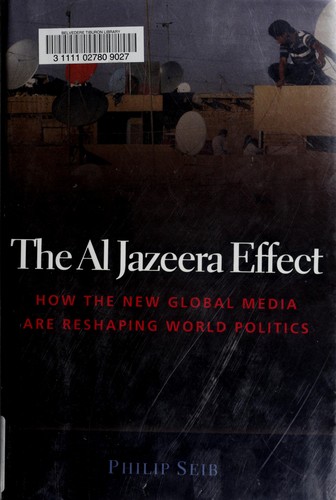
The Al Jazeera Effect
0
0
As an Amazon Associate and affiliate partner, Menrva Books earns from qualifying purchases. Learn more
Author Description
The battle for hearts and minds in the Middle East is being fought not on the streets of Baghdad, but on the newscasts and talk shows of Al Jazeera. The future of China is being shaped not by Communist Party bureaucrats, but by bloggers working quietly in cyber cafes. The next attacks by al Qaeda will emerge not from Osama bin Laden's cave, but from cells around the world connected by the Internet. In these and many other instances, traditional ways of reshaping global politics have been superseded by the influence of new media - satellite television, the Internet, and other high-tech tools. What is involved is more than a refinement of established practices. We are seeing a comprehensive reconnecting of the global village and a reshaping of how the world works. Al Jazeera is a paradigm of new media's influence. Ten years ago, there was much talk about the CNN effect, ' the theory that news coverage - especially gripping visual storytelling - was influencing foreign policy throughout the world. Today, 'the Al Jazeera effect' takes that a significant step further. The concept encompasses the use of new media as tools in every aspect of global affairs, ranging from democratization to terrorism, and including the concept of 'virtual states.' 'The media' are no longer just the media. They have a larger popular base than ever before and, as a result, have unprecedented impact on international politics. The media can be tools of conflict and instruments of peace; they can make traditional borders irrelevant and unify peoples scattered across the globe. This phenomenon, the Al Jazeera effect, is reshaping the world.--Jacket.
Menrva's Summary
THE THESIS
The Al Jazeera effect posits that new media, exemplified by the satellite television network Al Jazeera, have fundamentally reshaped global politics and international relations. The book argues that traditional methods of influencing global affairs have been superseded by the pervasive impact of new media technologies such as satellite television and the Internet. It explores how these tools are utilized in various aspects of global politics, from promoting democratization to facilitating terrorism, and introduces the concept of 'virtual states.' The author contends that the media now possess a broader popular base than ever before, granting them unprecedented influence on international politics, capable of both fostering conflict and promoting peace, and rendering traditional borders increasingly irrelevant.
THE SCOPE MAP
- Analysis of the 'CNN effect' as a precursor to the 'Al Jazeera effect'.
- Exploration of Al Jazeera's role as a paradigm of new media influence in the Middle East.
- Discussion of the Internet's role in shaping global politics, using China and al Qaeda as examples.
- Examination of new media as tools for democratization and terrorism.
- Introduction and analysis of the concept of 'virtual states'.
- The impact of new media on traditional borders and global connectivity.
- The dual capacity of media to act as instruments of conflict and peace.
THE AUTHORITY PERSPECTIVE
The book is recognized for its insightful analysis of how new media technologies, particularly Al Jazeera, have transformed global political discourse and action. It is seen as a significant contribution to understanding the evolving landscape of international relations in the digital age. The work is noted for its comprehensive scope, connecting phenomena from democratization movements to terrorism through the lens of media influence. The author's framework, the 'Al Jazeera effect,' has become a key concept for analyzing the power of contemporary media in shaping world events.
Page Count:
225
Publication Date:
2008-01-01
ISBN-10:
1597972002
ISBN-13:
9781597972000
History
Non-Fiction
Politics
International relations
Journalism
Media Studies
Community Tags
Similar Books